


MASARYK Store
Status: Study, project, completed
Location: Holíč
Authors: Matúš Bišťan, Martin Medlen (Architects, Main Engeneers), Peter Pasečný (Landscape Architect)
Collaboration: Jakub Števanka (interior co-author), Daniel Růžička, Róbert Sekula
Usable Area: 3,278 m²
Indoor Sales Area: 1,724 m²
Outdoor Sales Area: 2,300 m²
Built-up Area: 3,836 m²
Building costs: 5 000 000 €
Project phases:
2021
feasibility study
architectural study
planning permission documentation
2022
building permit documentation tender documentation
2023-2025
construction documentation
2024-2025
realization, author's supervision
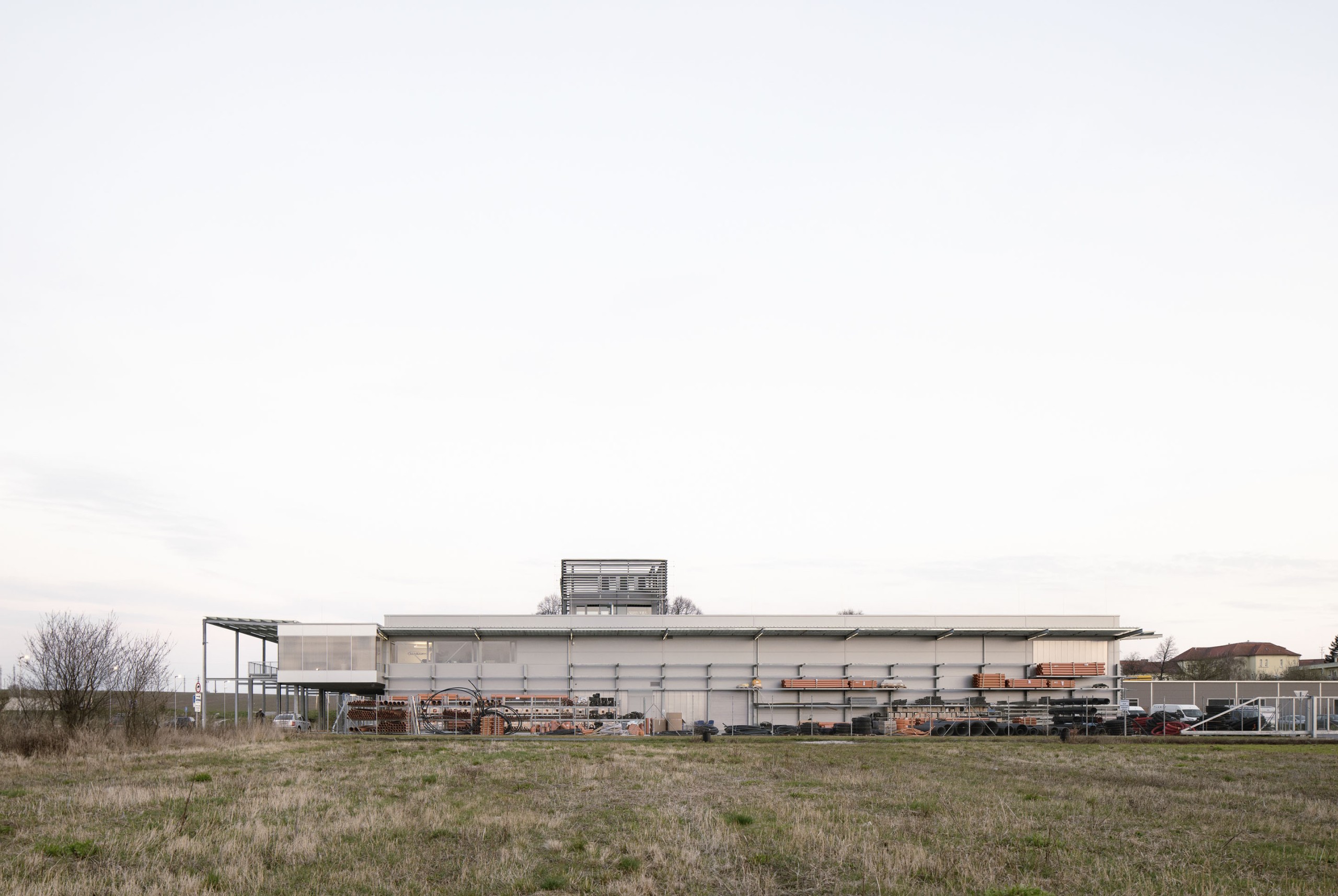
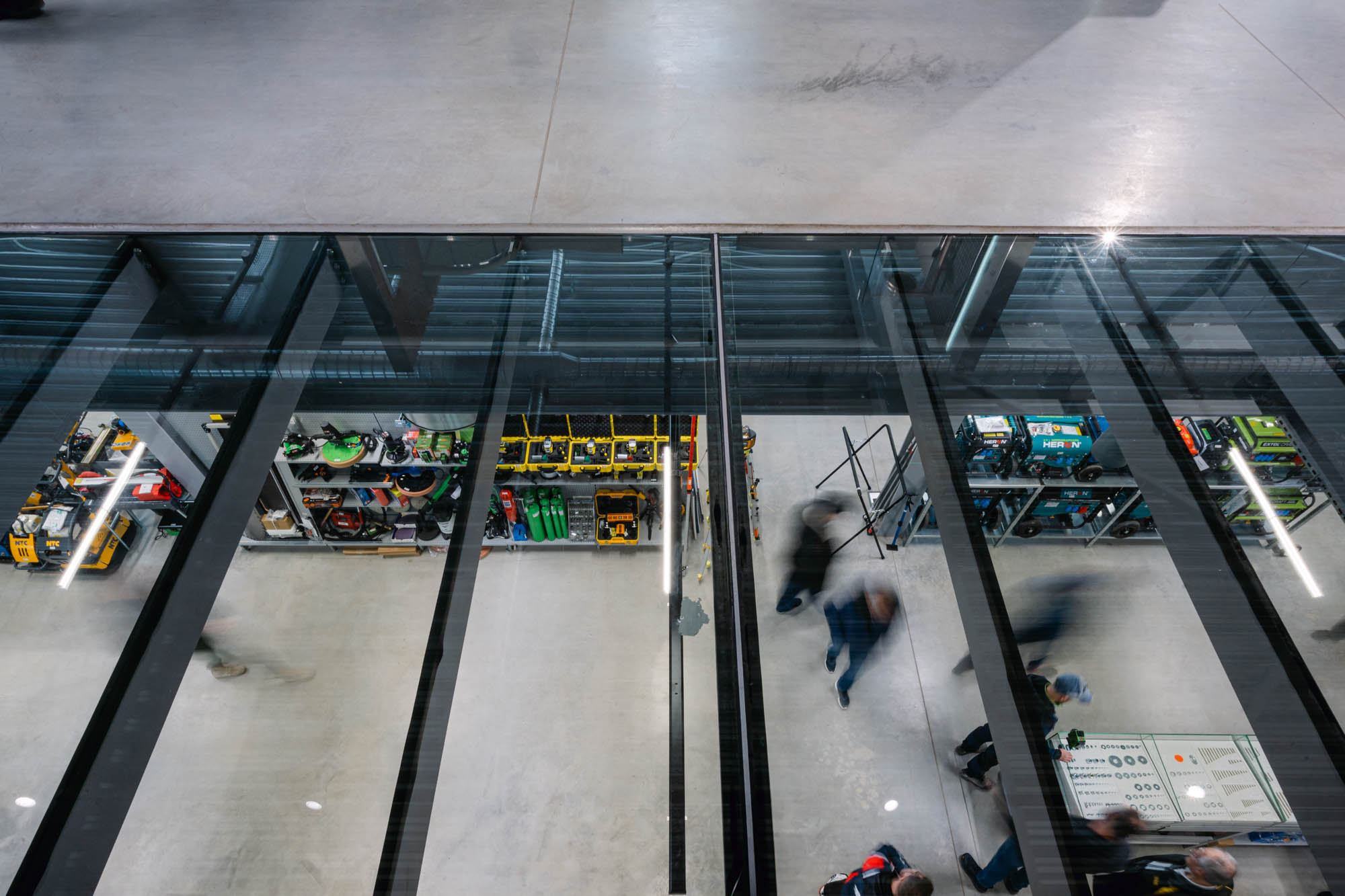
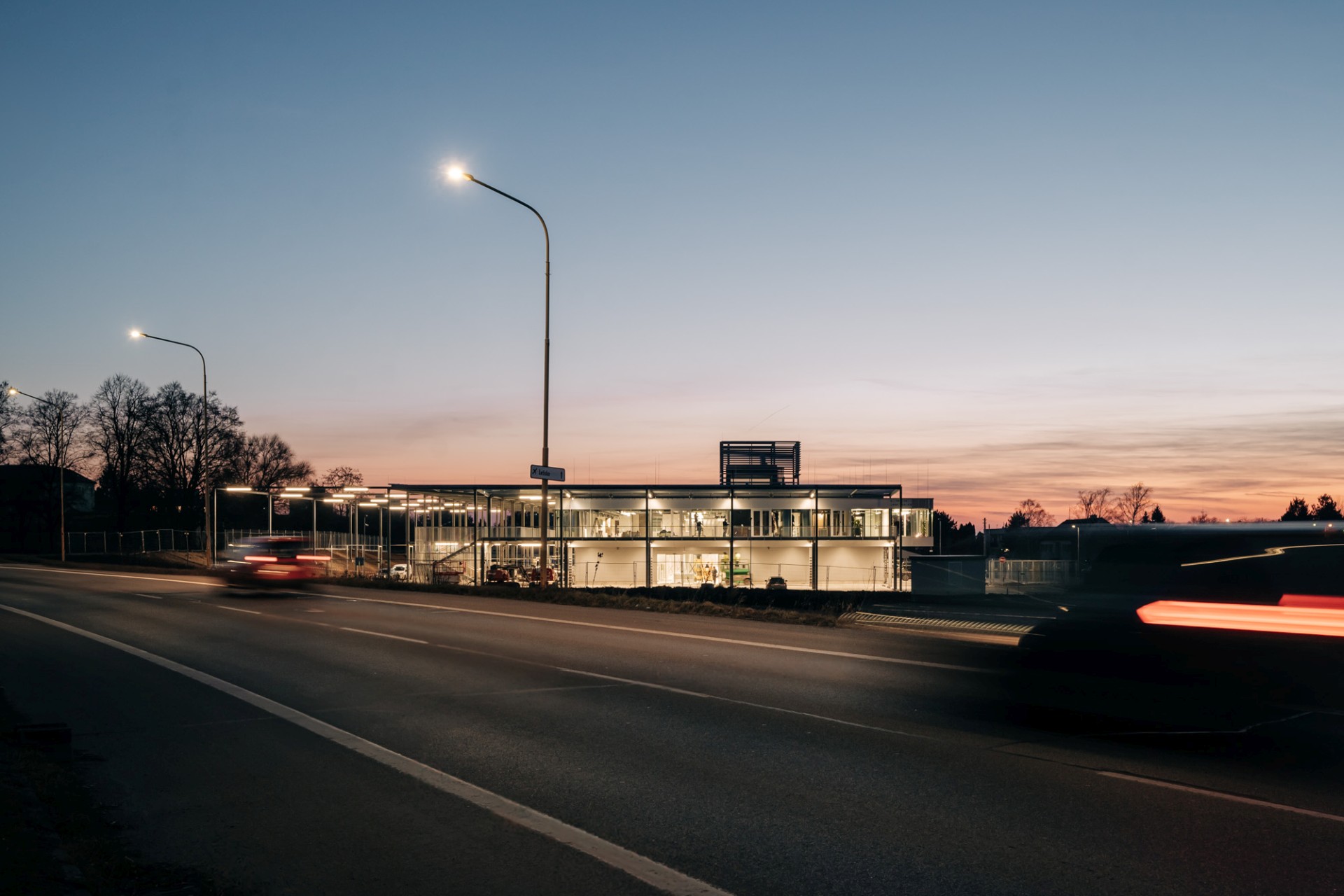
The MASARYK store in Holíč explores the typology of peripheral shopping structures—typically reduced to anonymous metal boxes—and reconsiders the potential of the prefabricated steel hall. Can such buildings transcend standardization? Is there a room for architecture? Can detail, spatial definition and distribution, and material expression contribute to a company’s identity? And is it possible to establish a stable architectural framework for a business that is inherently dynamic and continuously evolving? The client is a family-run company with over thirty years of history—resilient, adaptable, and deeply embedded in the Záhorie region. From modest beginnings, selling pumps and plumbing supplies from a single room in a family house, the company has grown into a well-established retailer offering a broad range of tools and installation materials, complemented by a successful bathroom studio. Today, it employs more than 35 people and maintains a strong local presence.
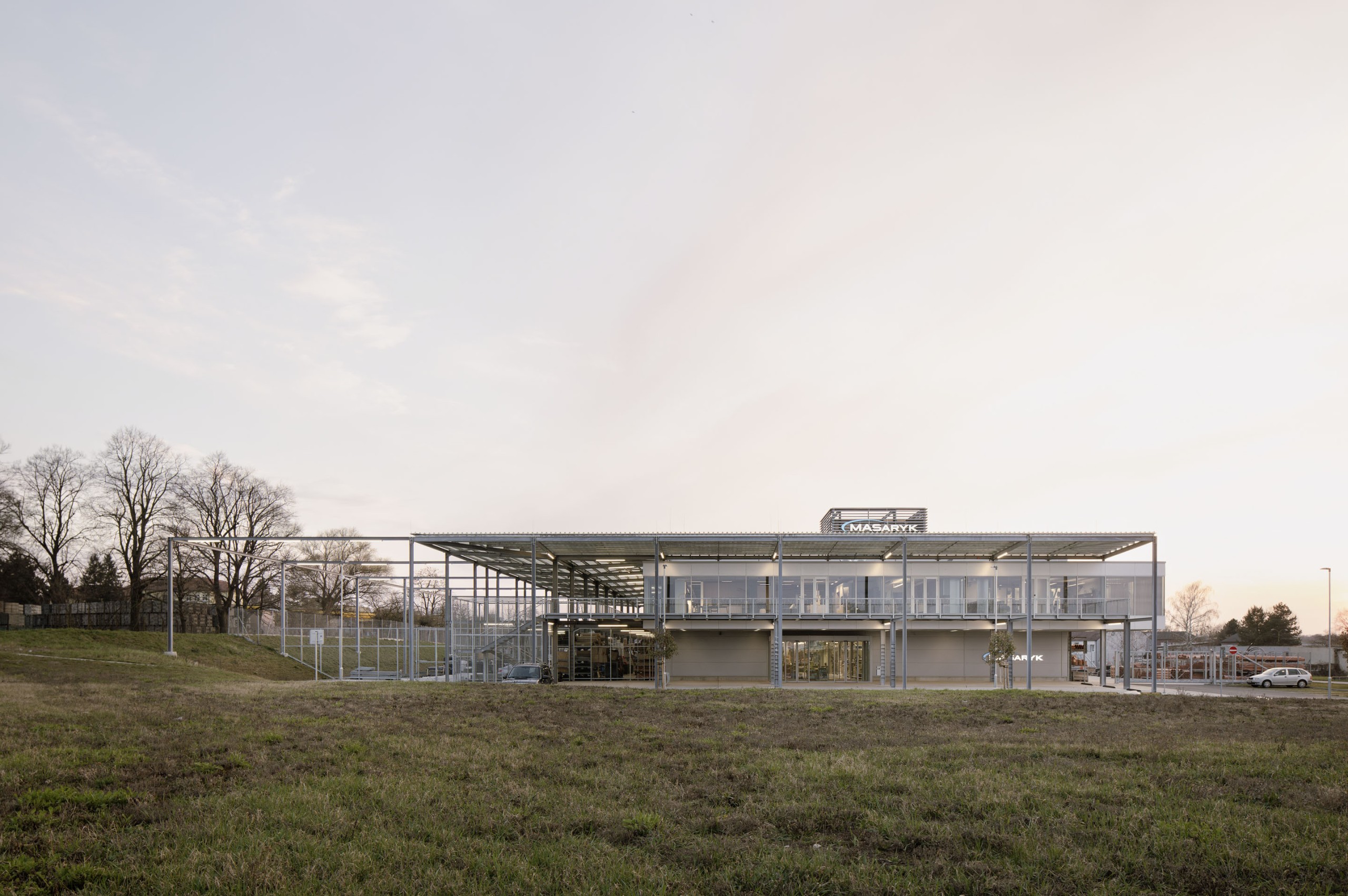
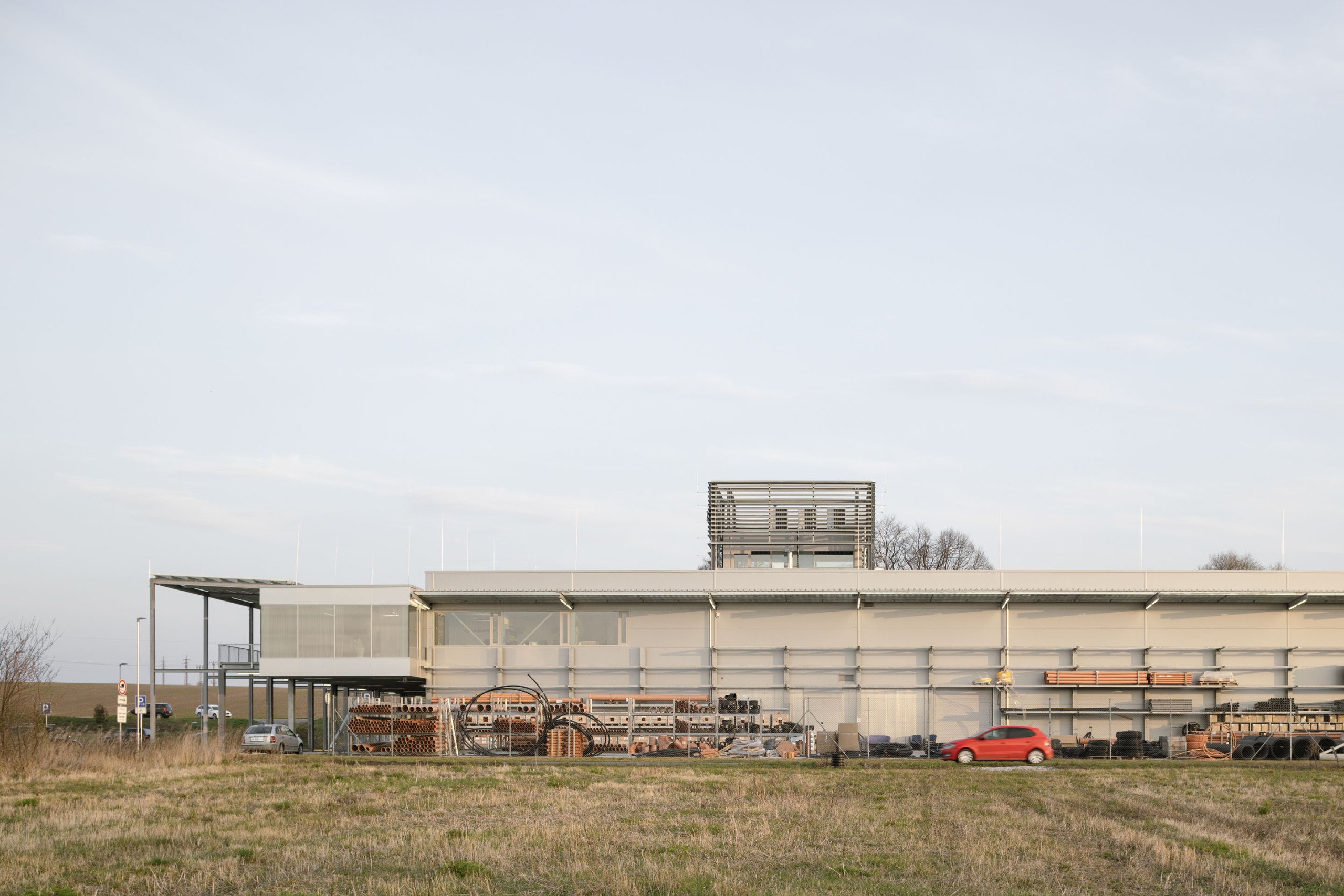
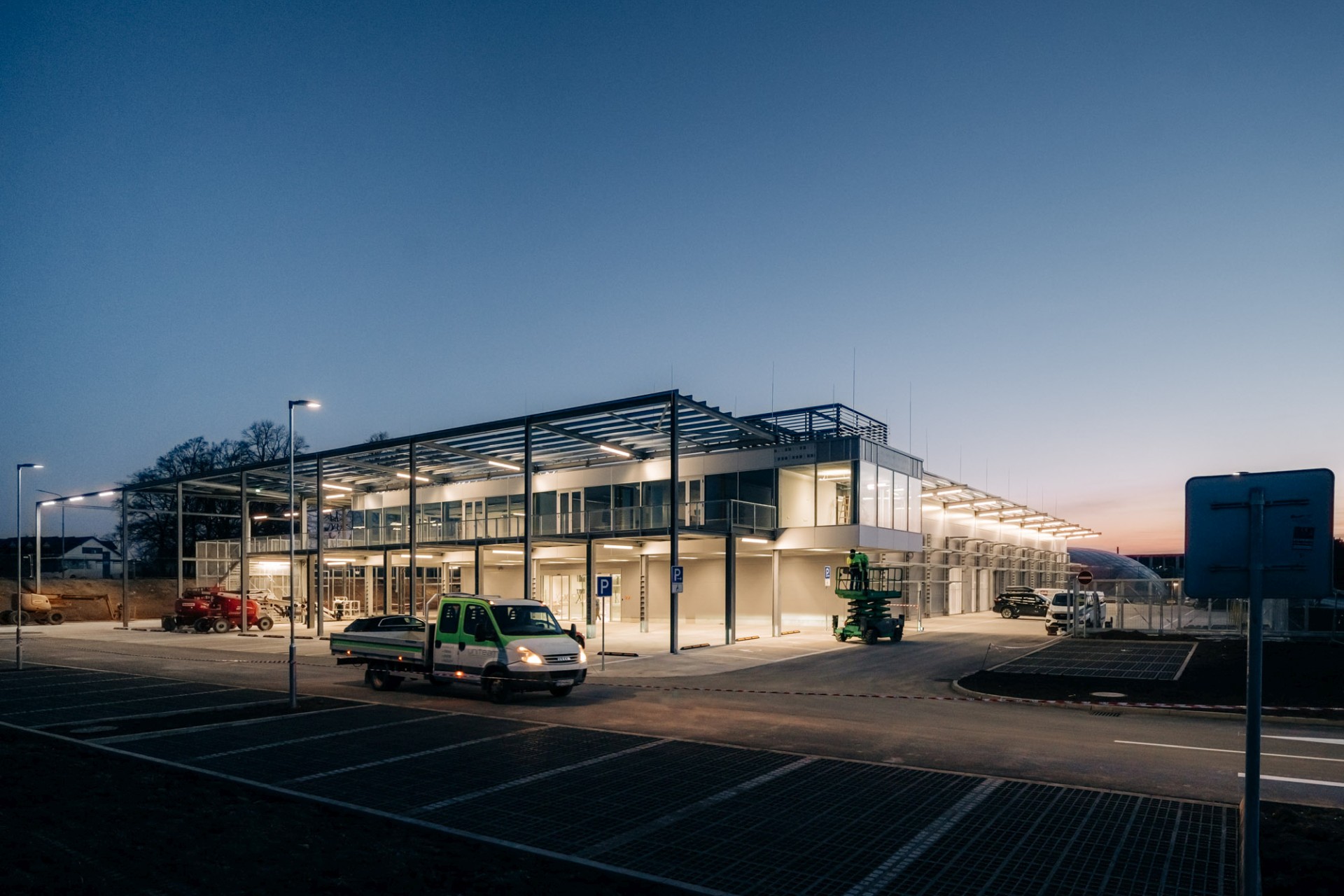
The building is situated on the northern edge of Holíč, within an emerging zone of industrial and warehouse development along Hollého Street. Its exposed structure and generous glazing establish a visible presence toward the elevated Kátovská road—the main route to Skalica—while the rear edge of the site is defined by the historic embankment of a mill water canal dating back to the era of Maria Theresa.
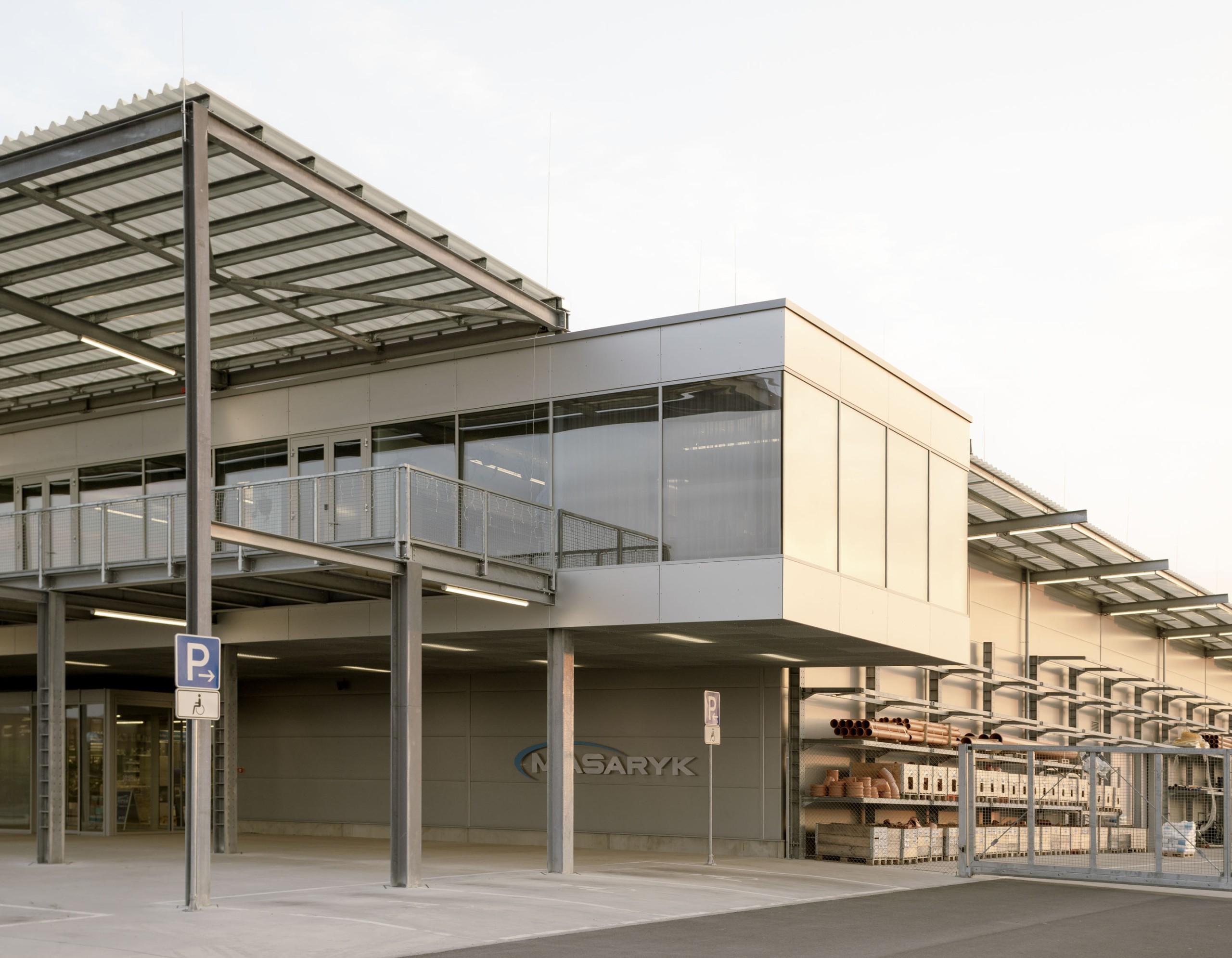
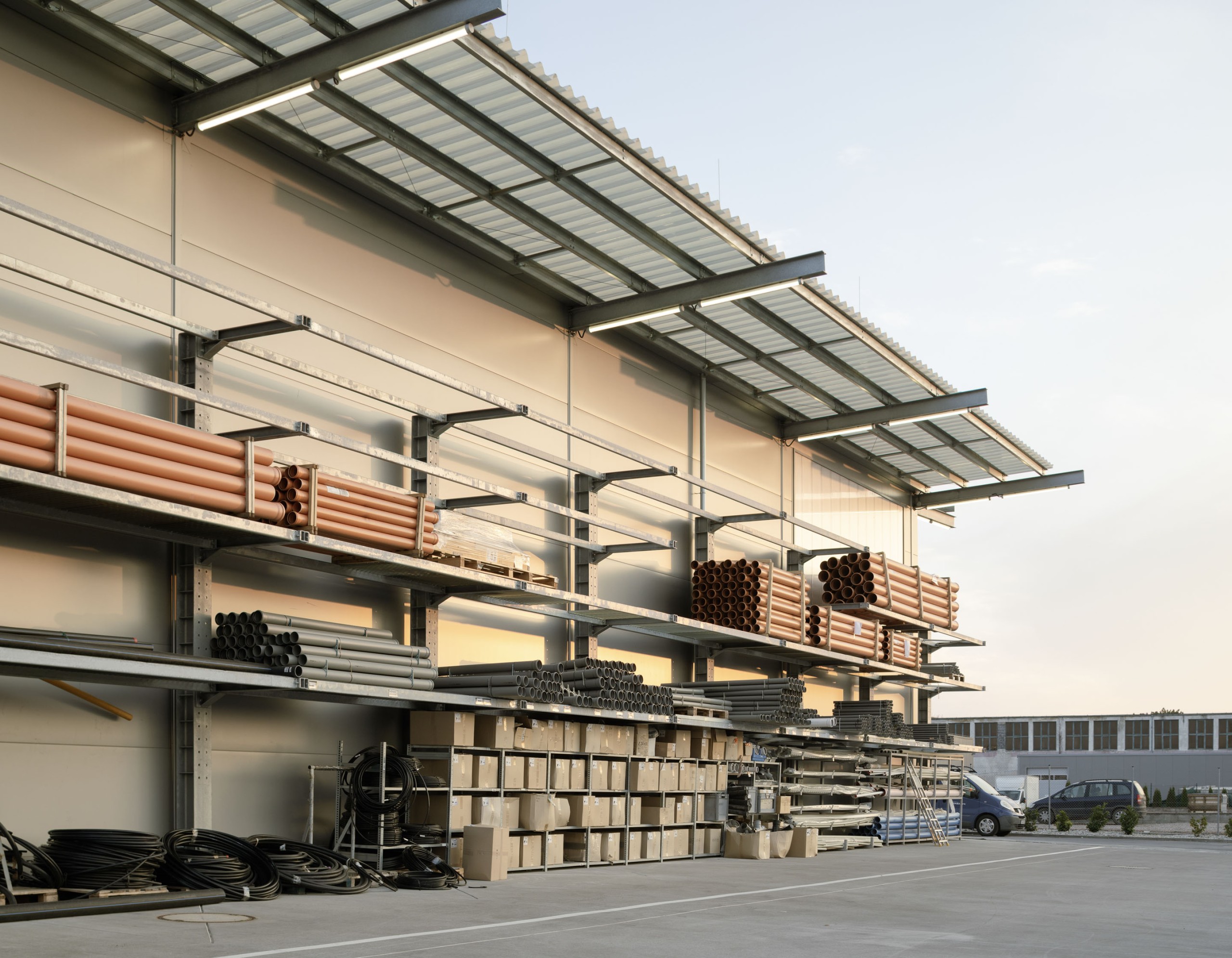
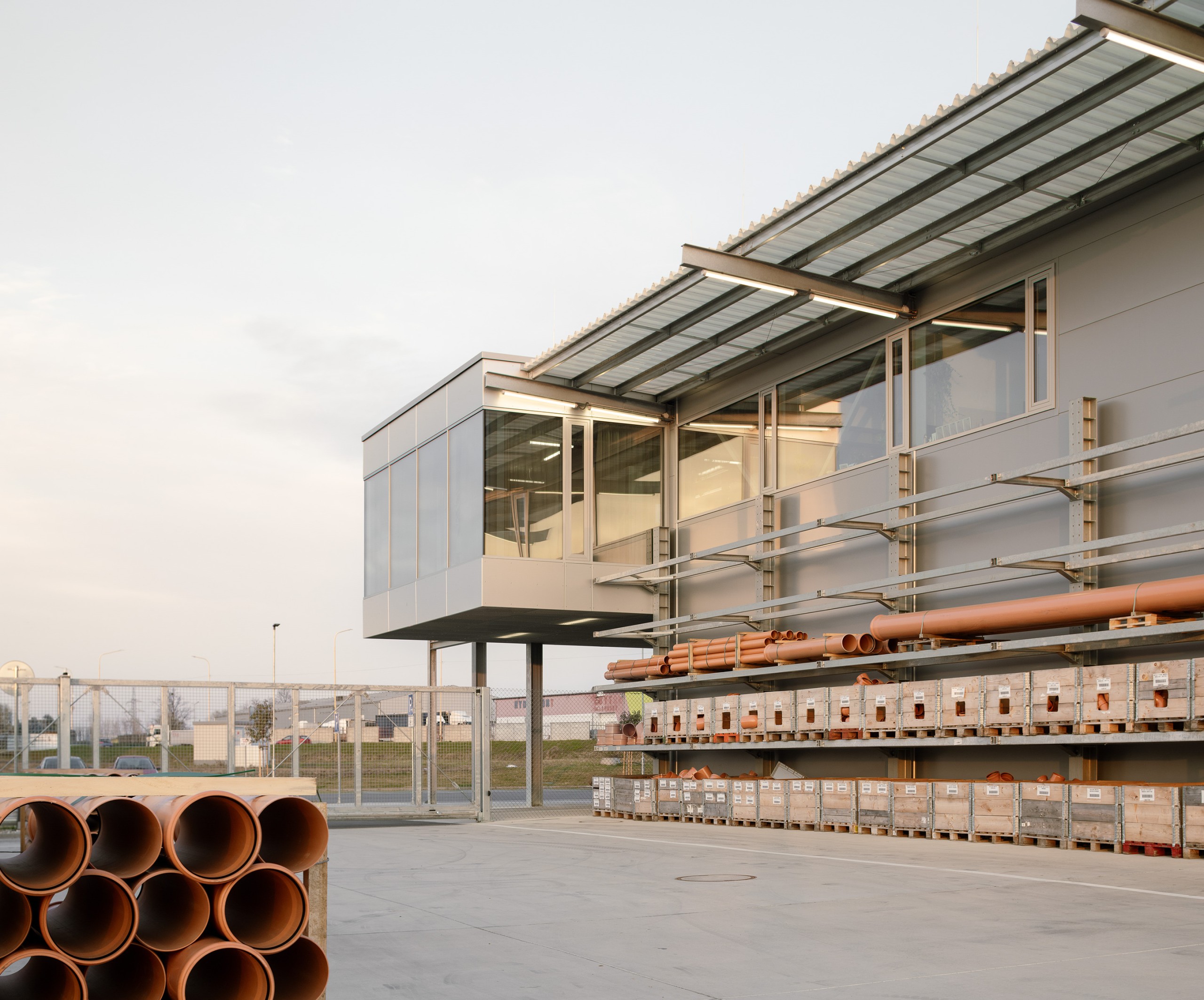
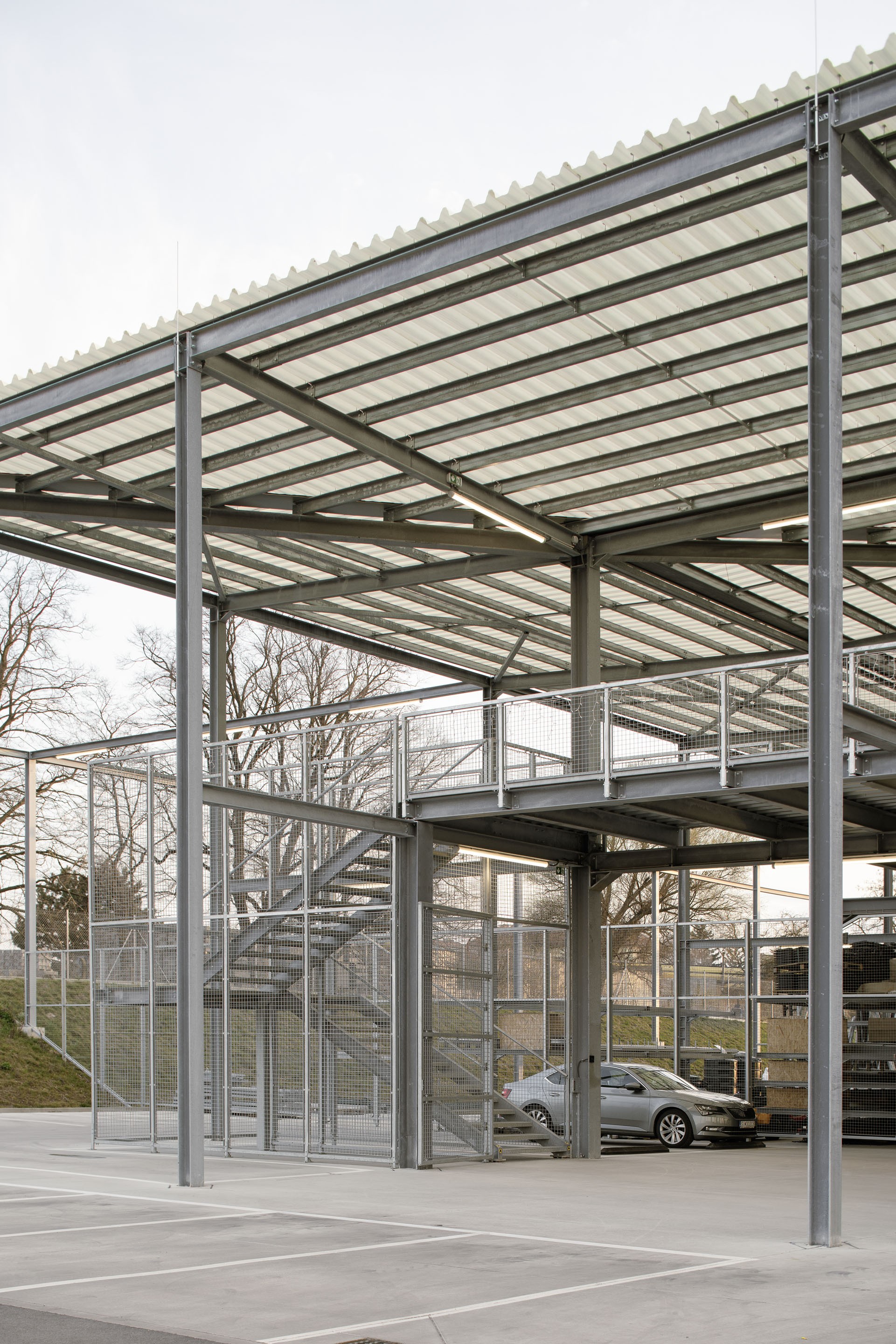
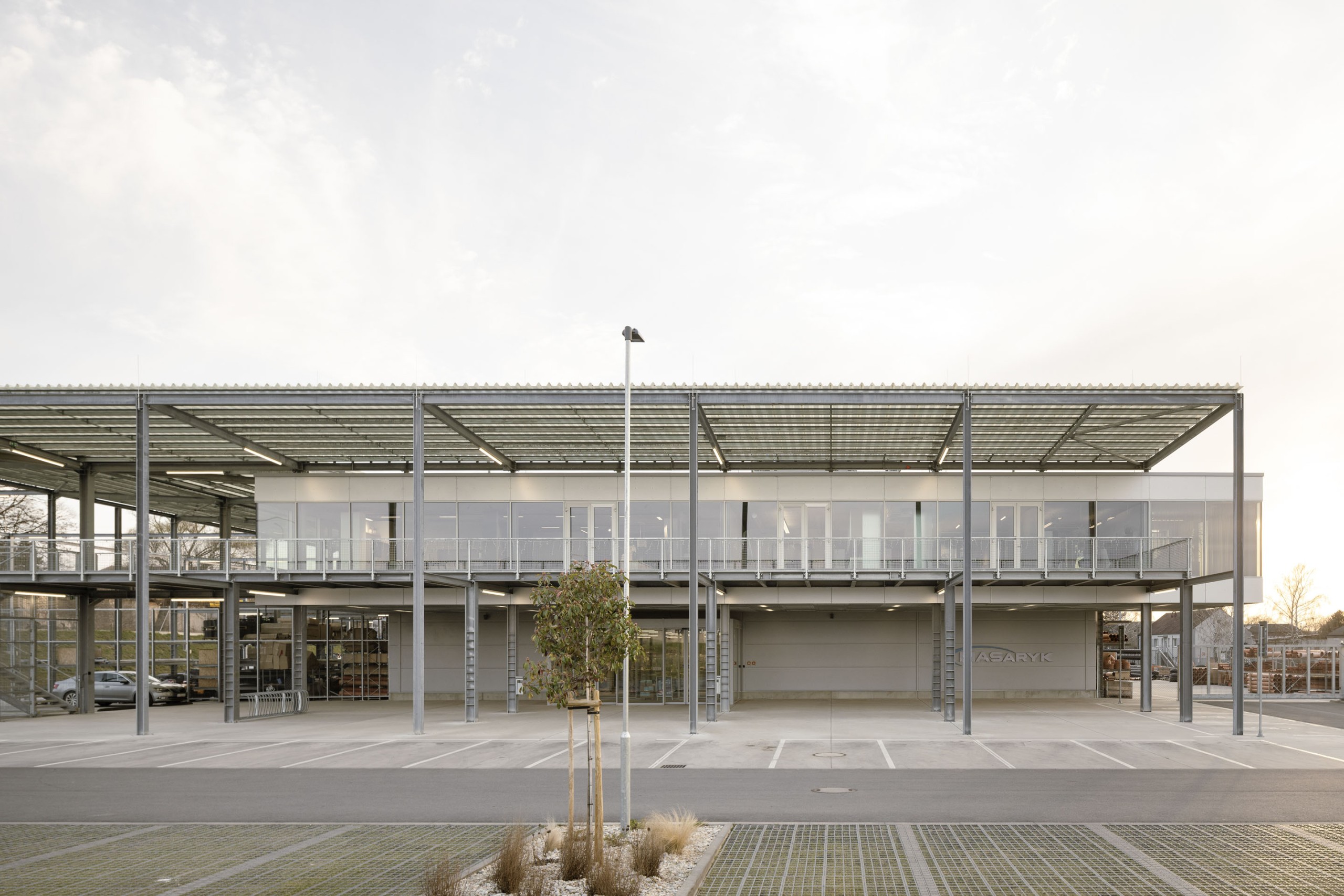
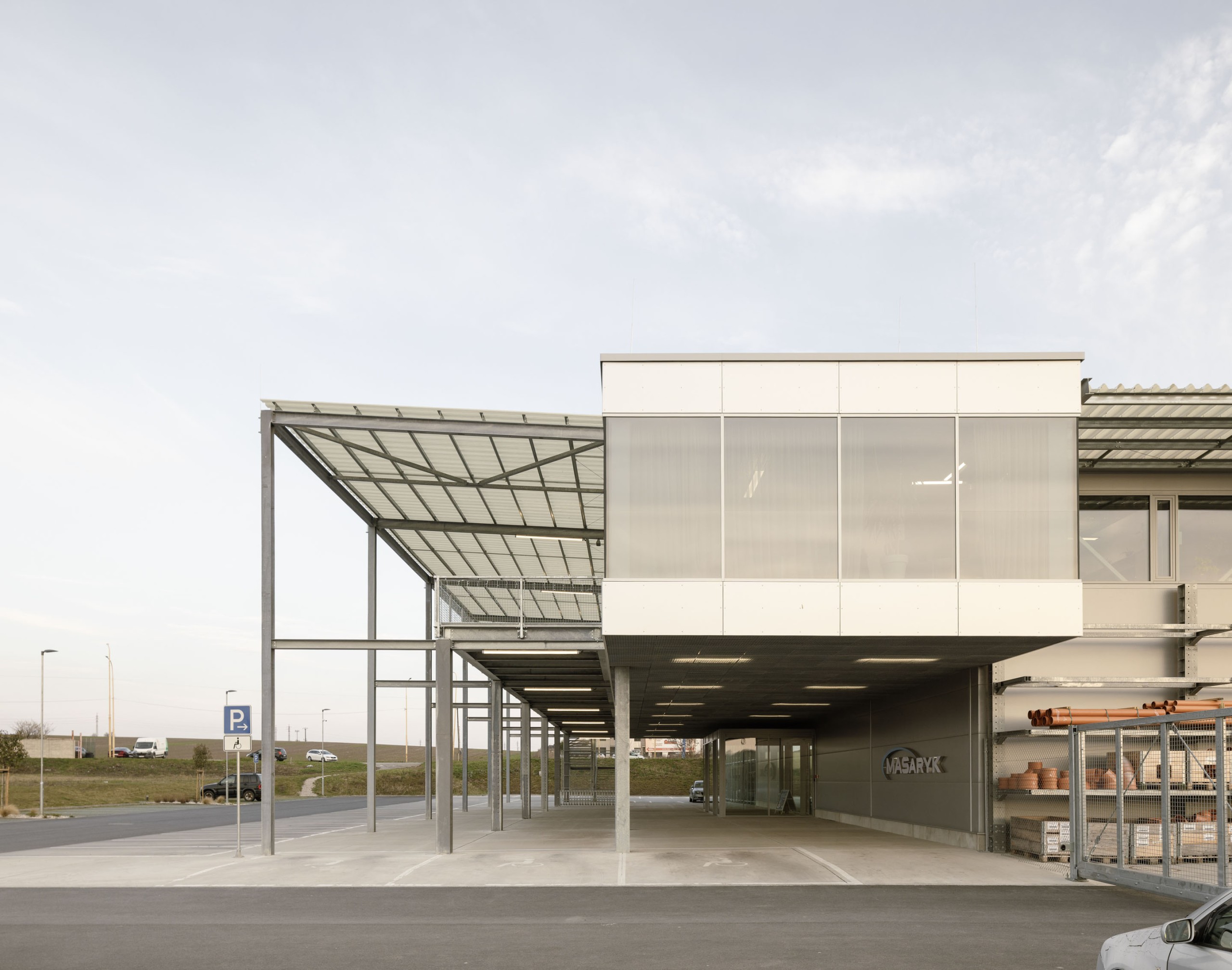
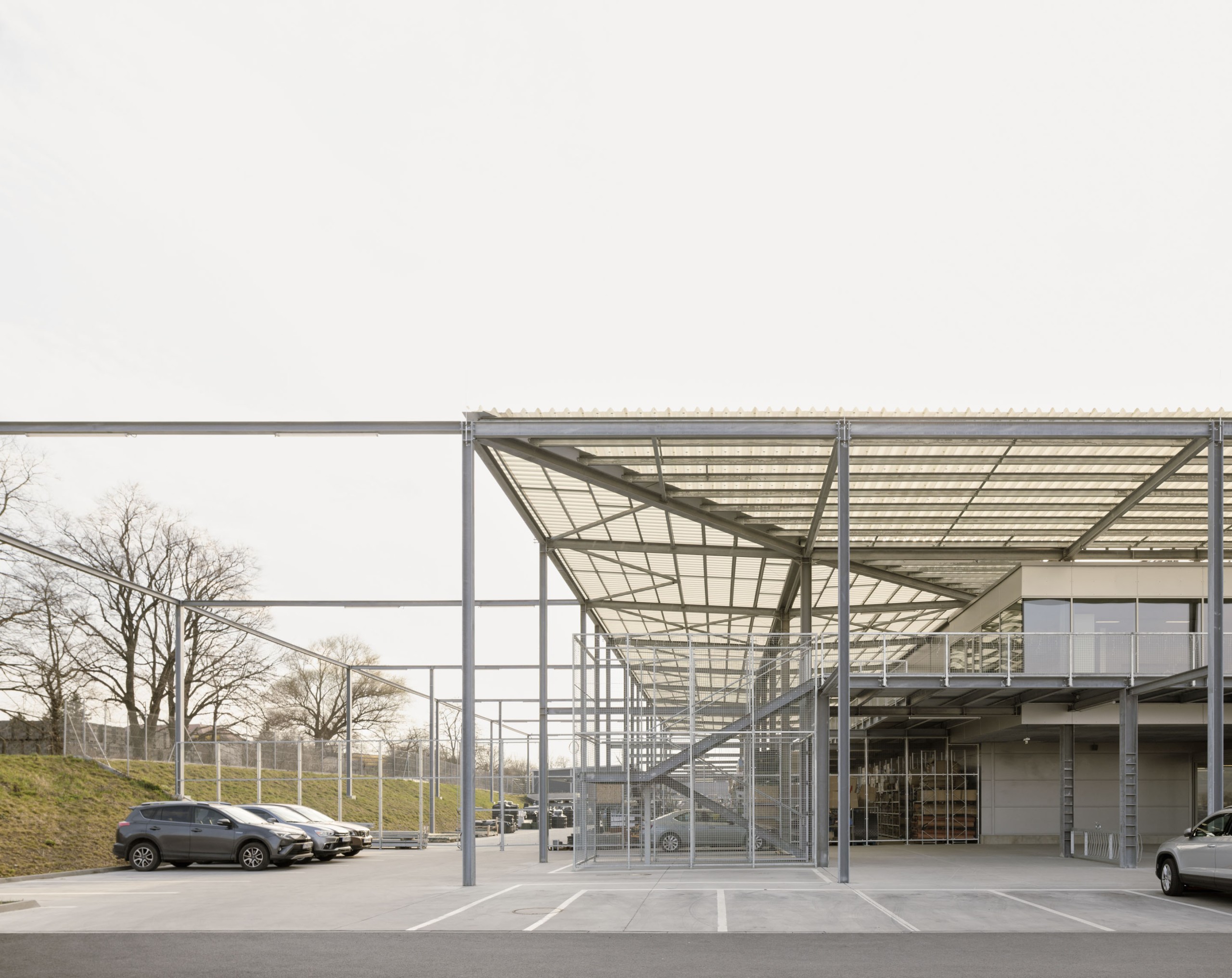
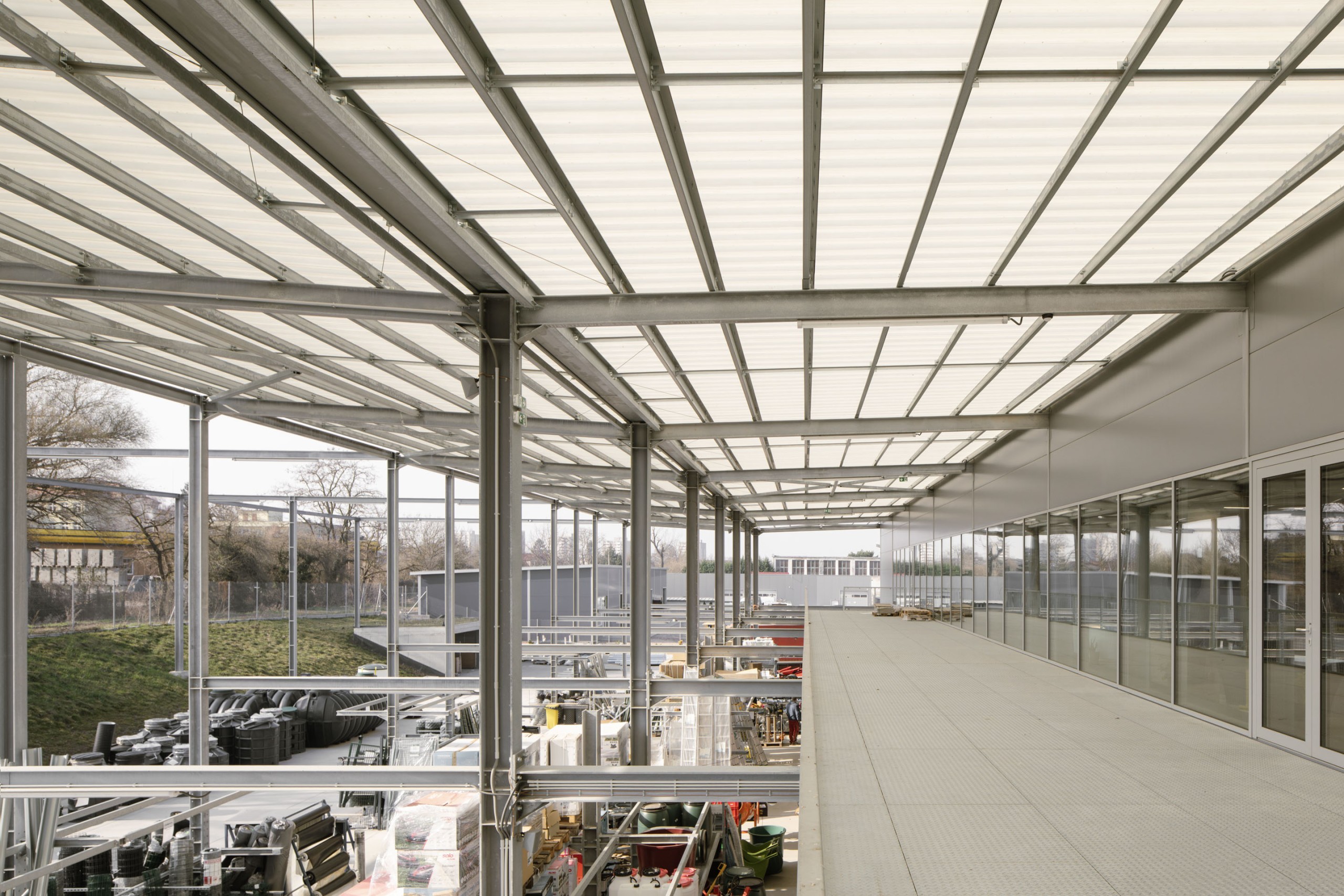
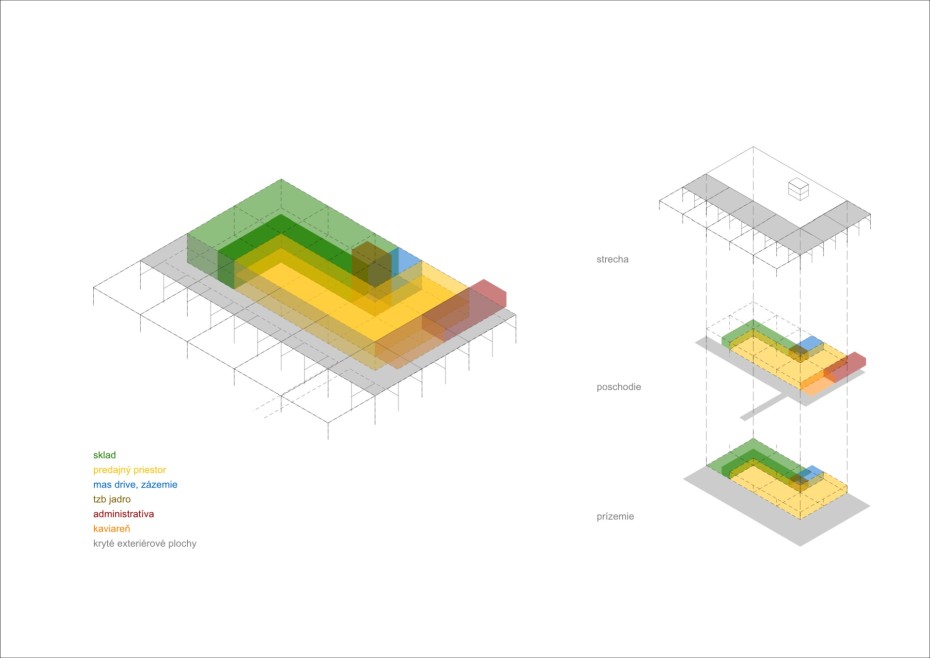
The design originates from a 15 × 15 m structural module, organized into a 2 × 4 grid. The volume is articulated as two interlocking L-shaped forms: one accommodating a double-height warehouse, the other retail areas distributed across two levels. This primary mass is complemented by a cantilevered administrative volume with a café at the second floor, originally conceived as being connected to the surrounding landscape by a bridge (not yet realized). Encircling the building is a layered intermediate zone—defined by a lightweight steel canopy structure and external storage systems—which mediates between interior and exterior, sales and logistics.
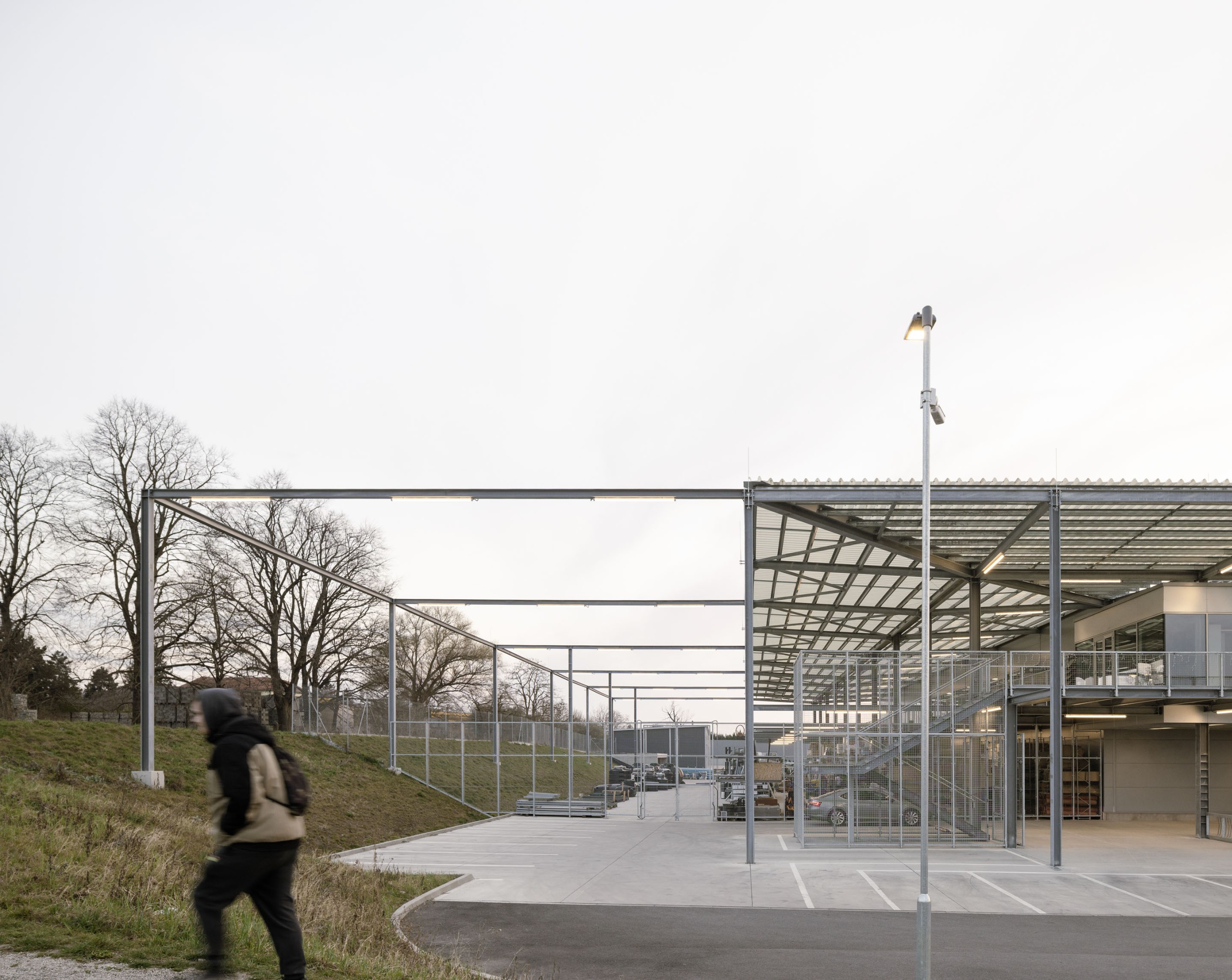
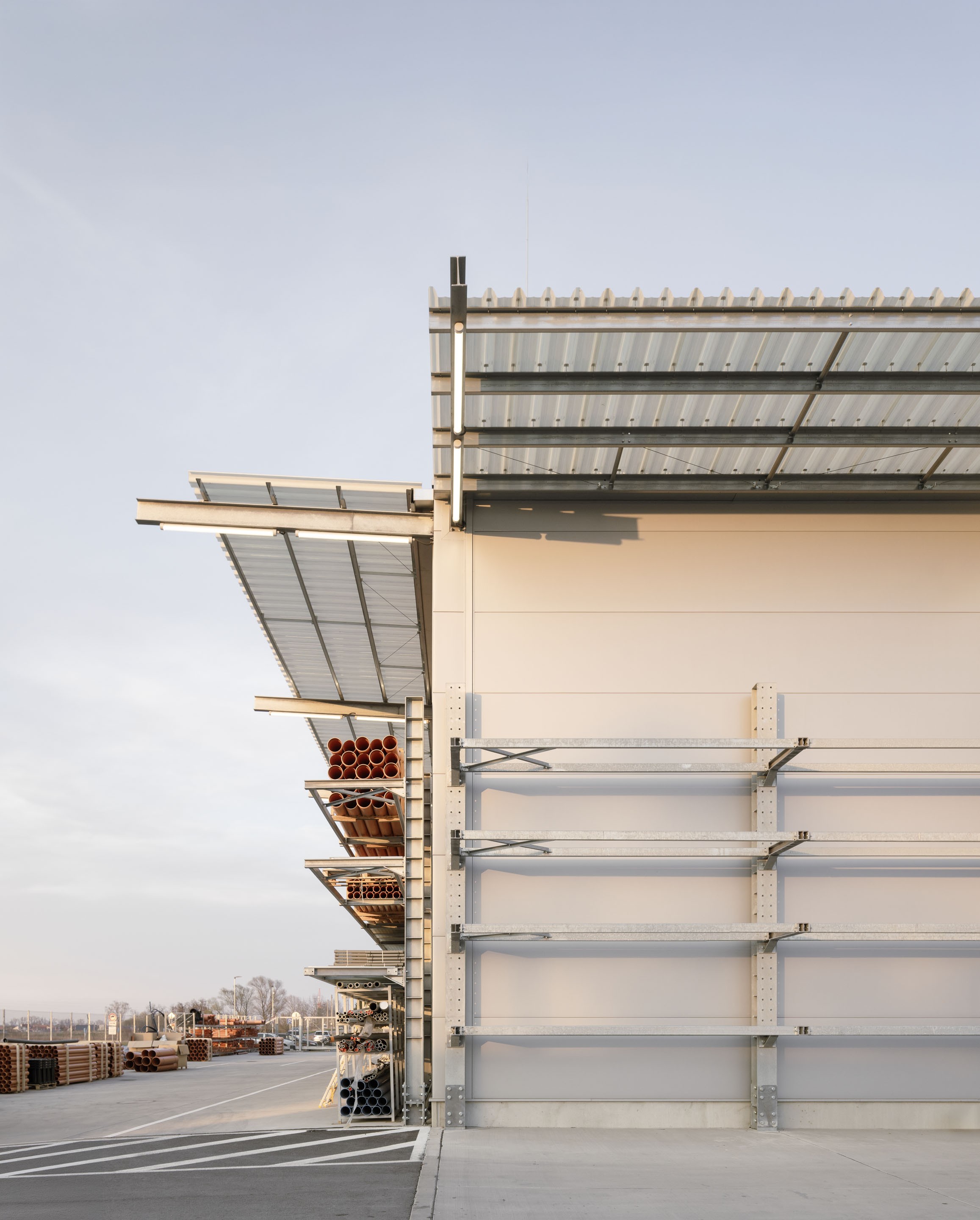
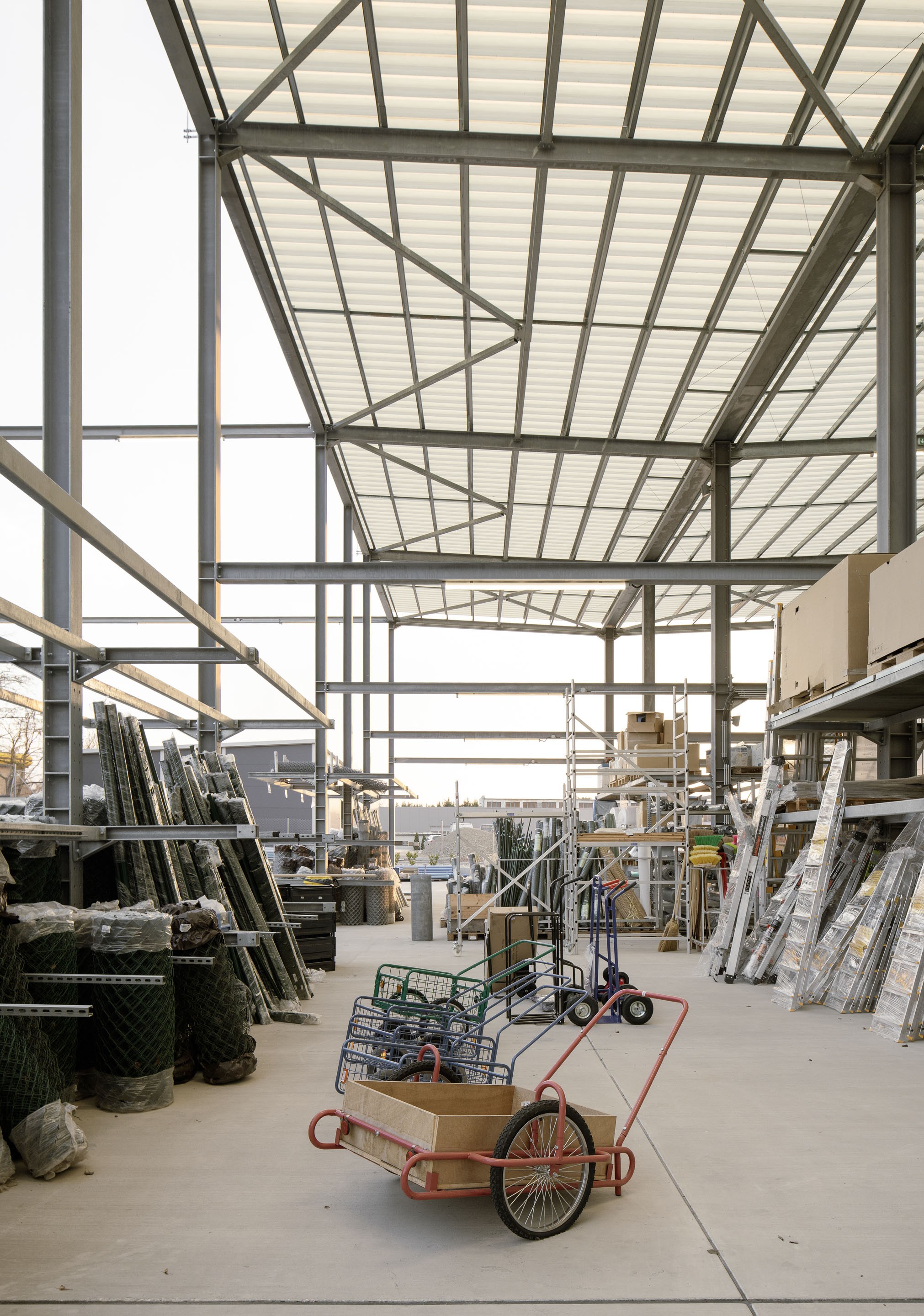
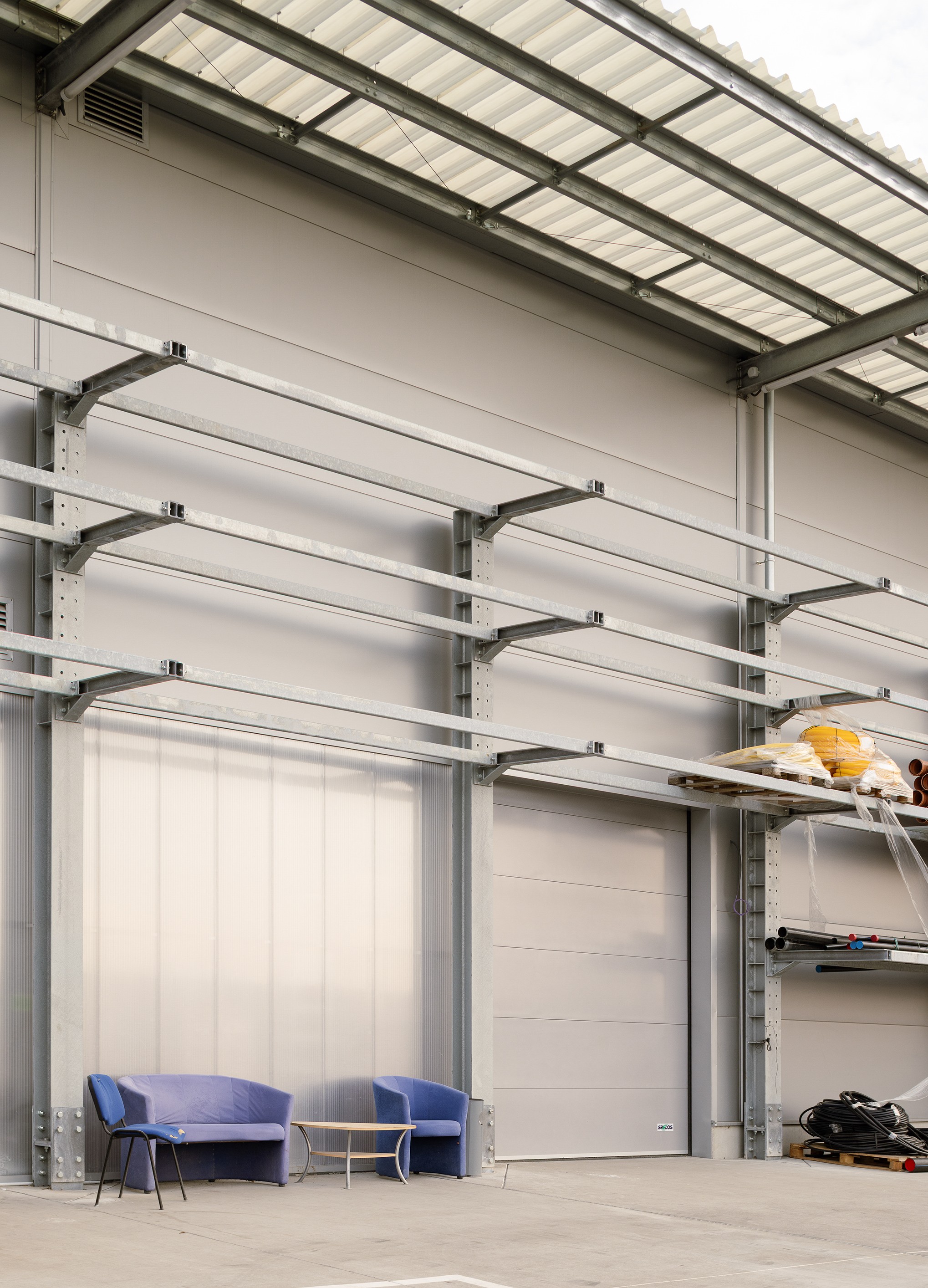
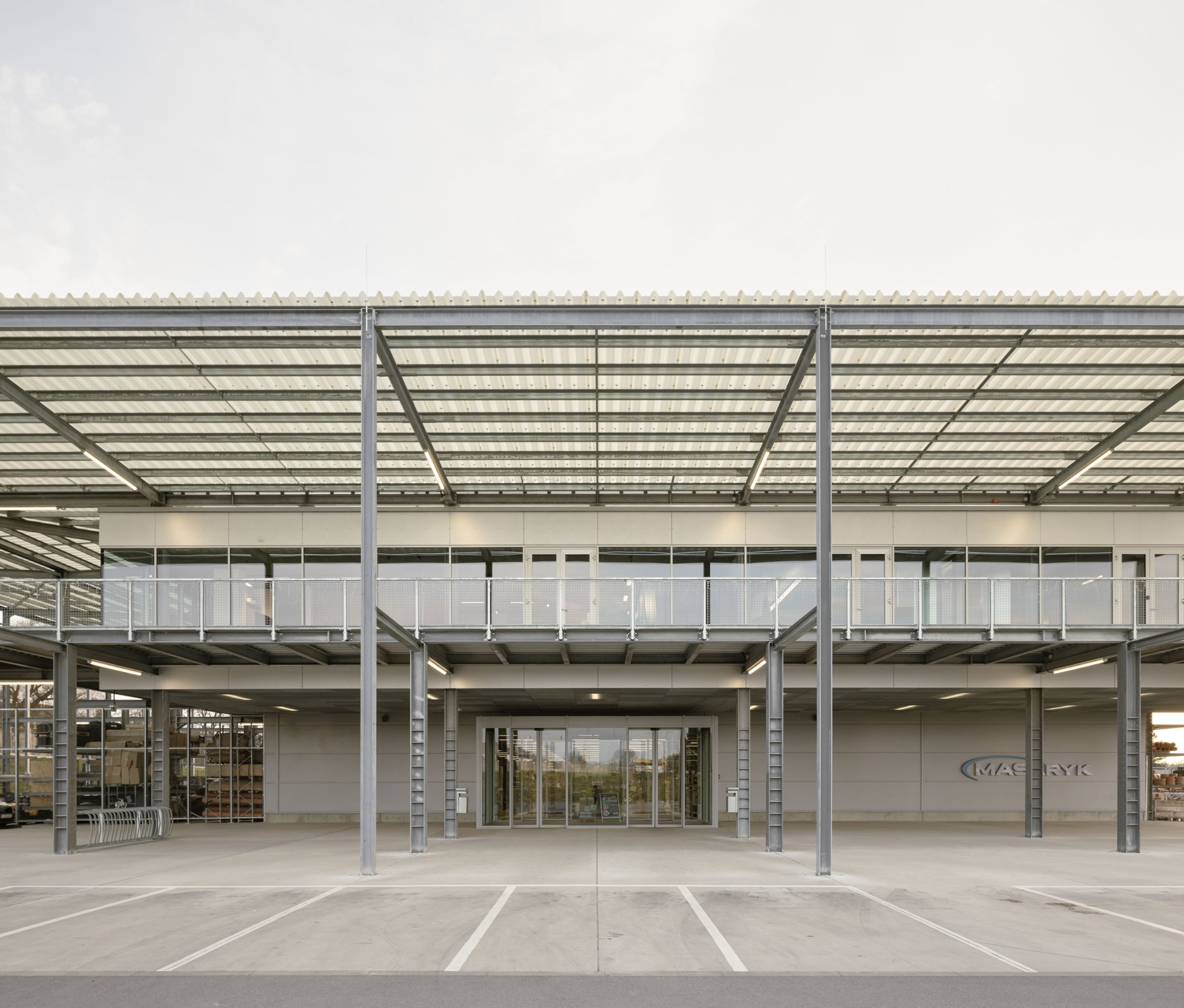
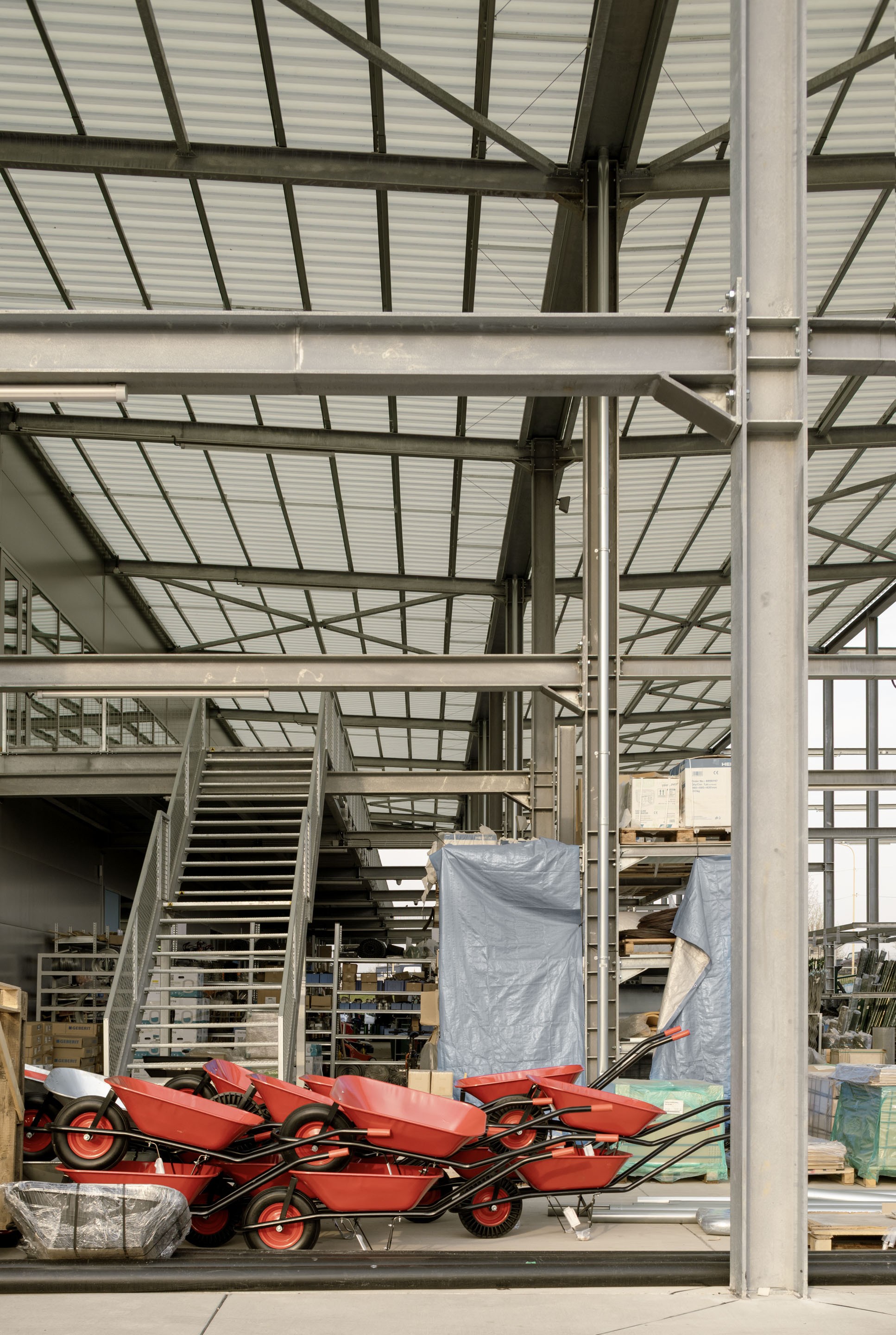
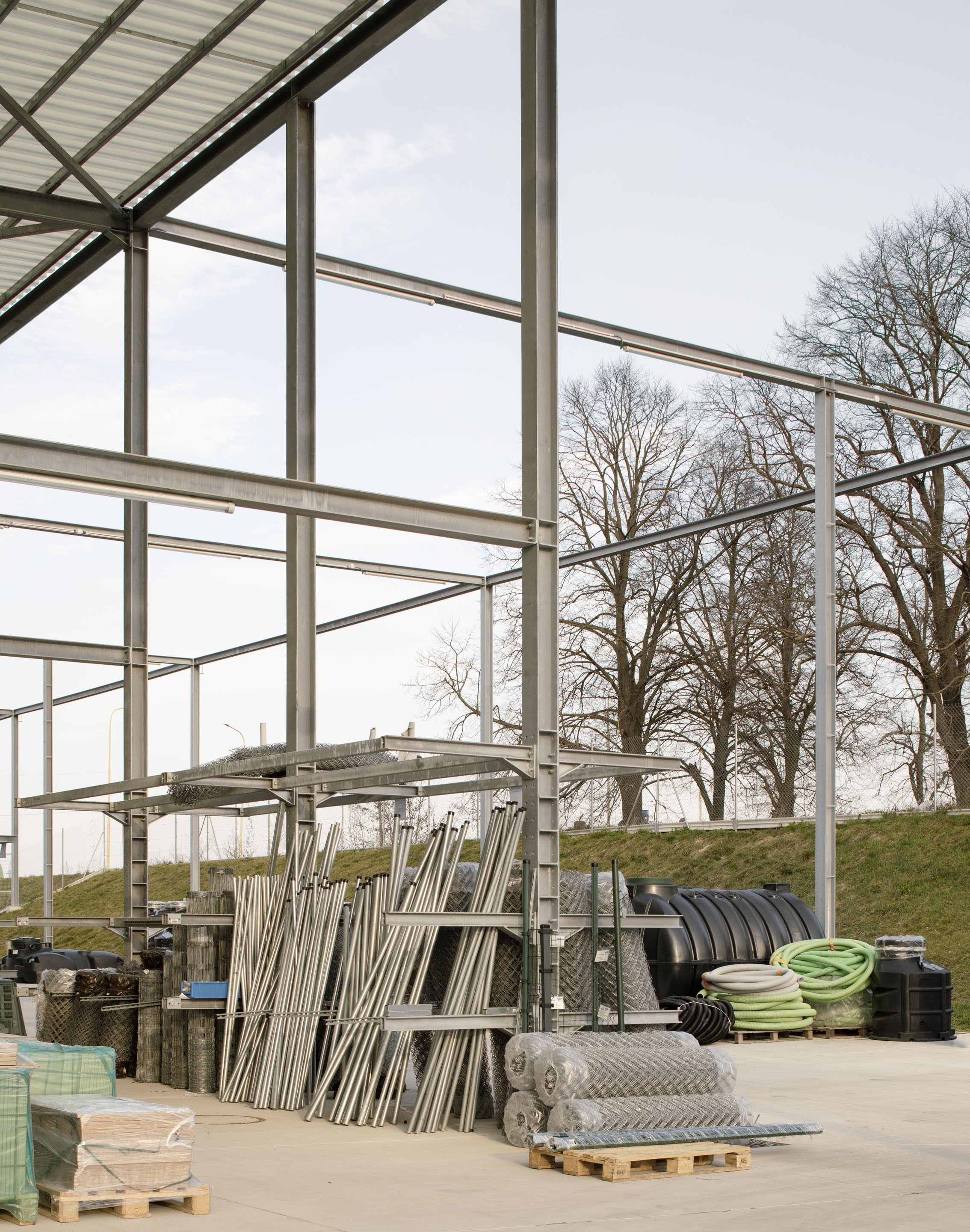
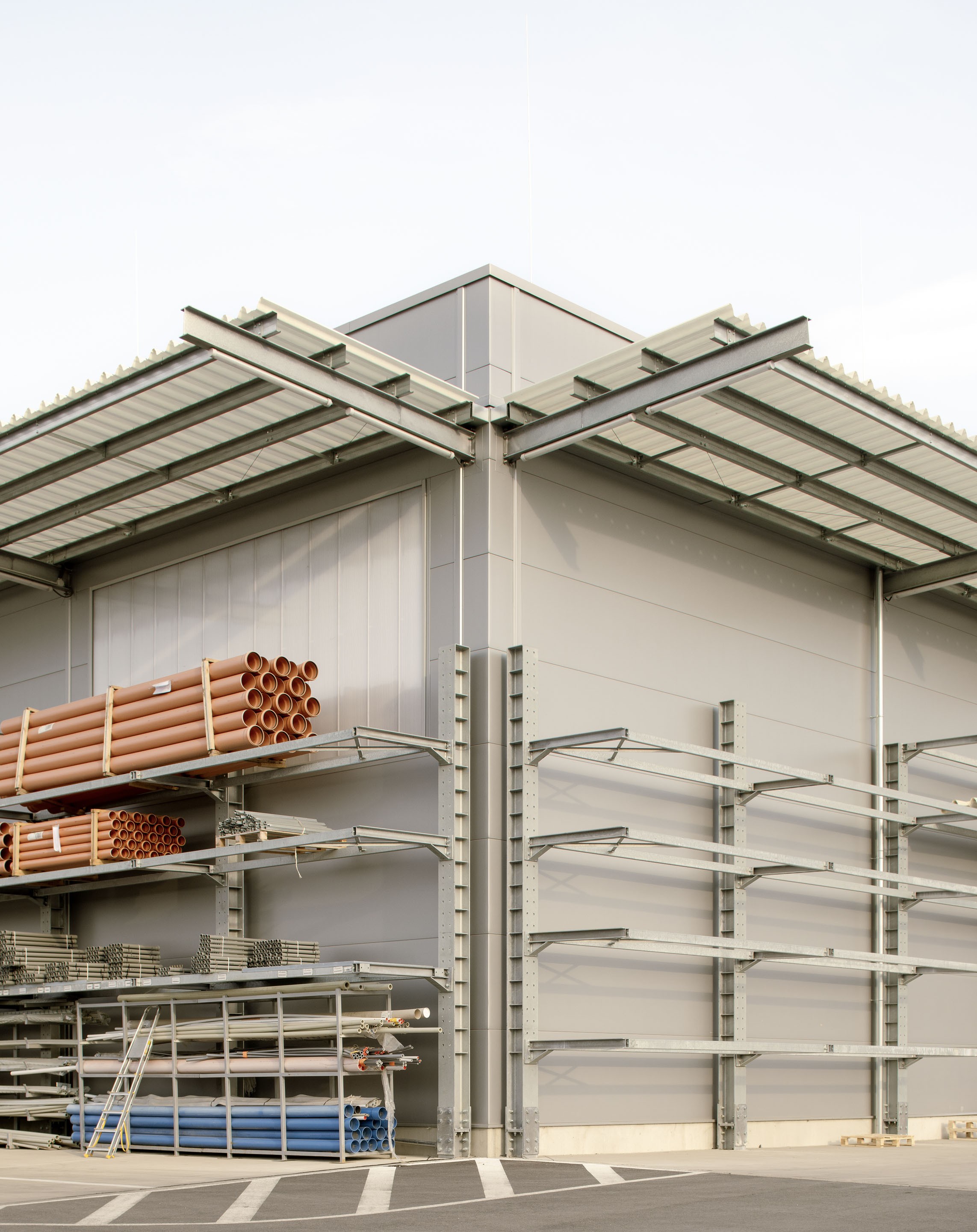
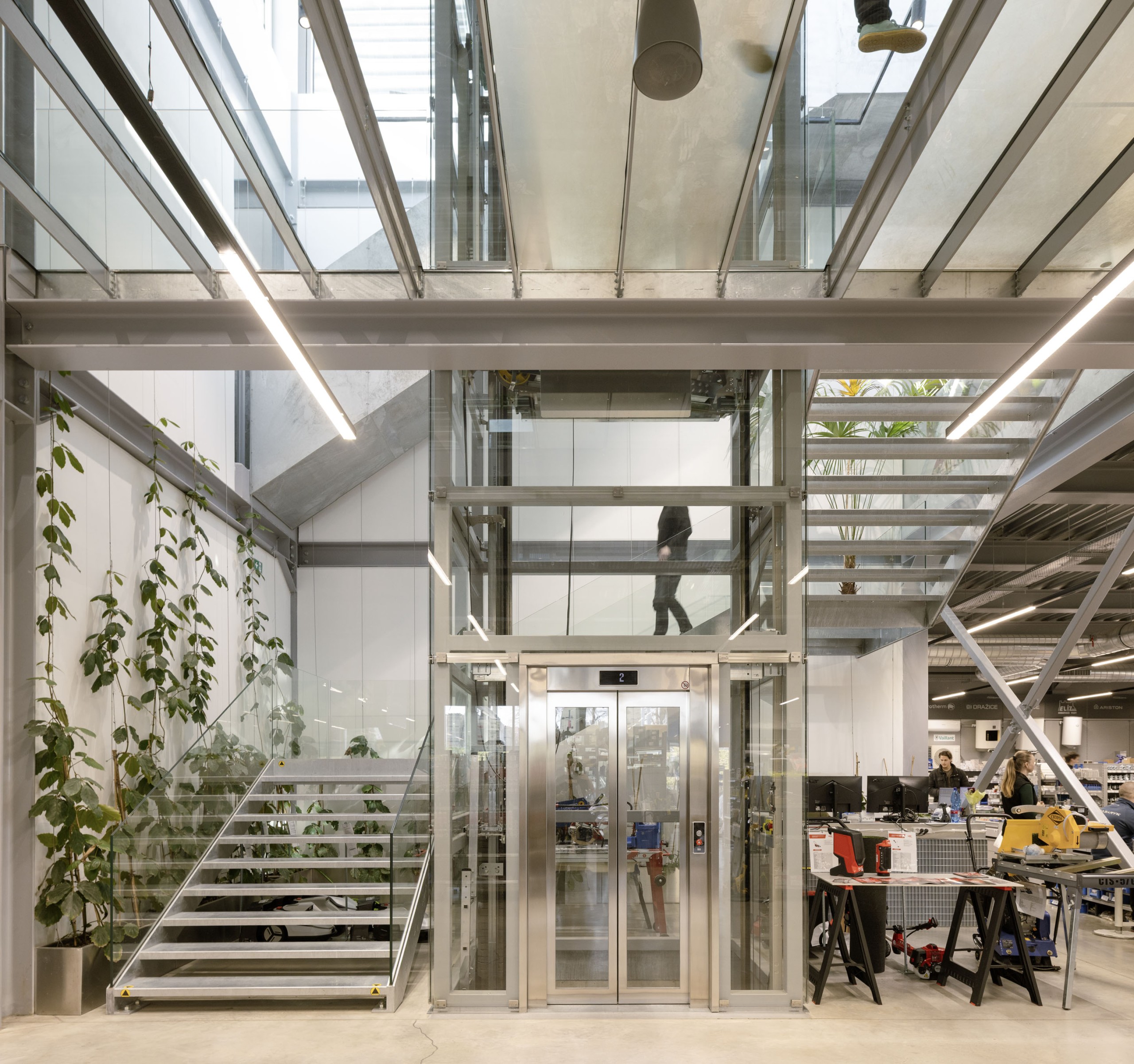
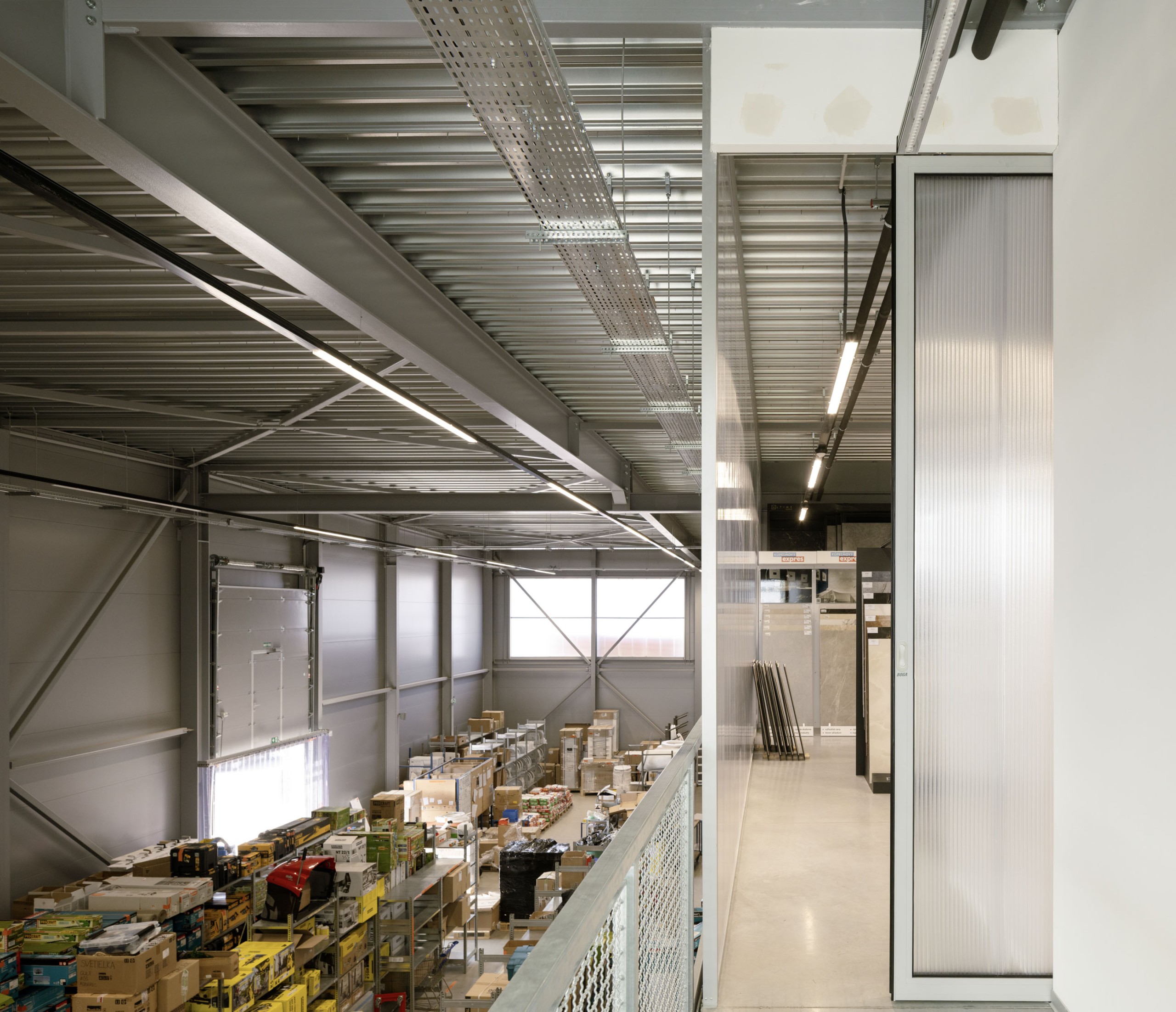
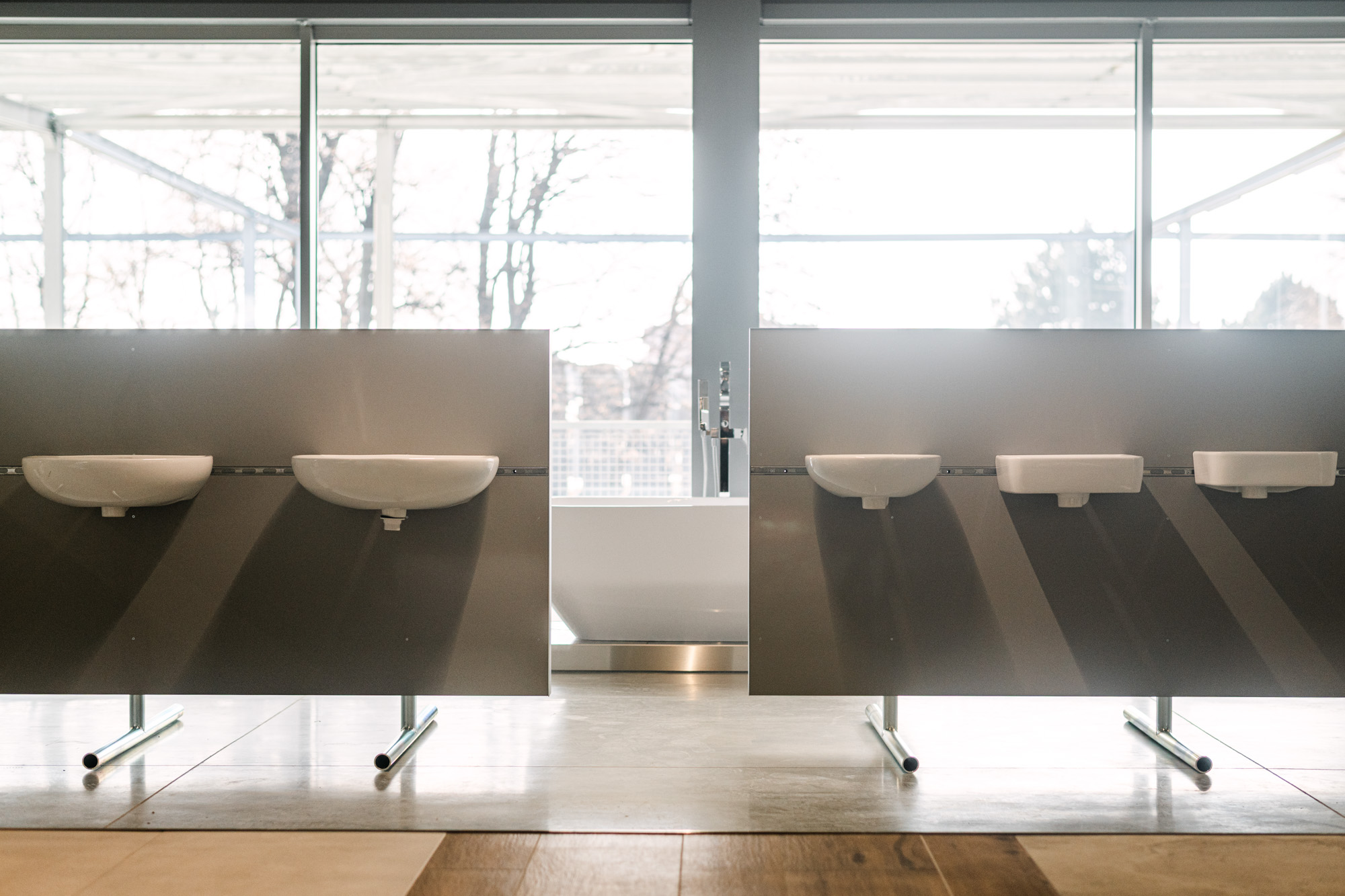
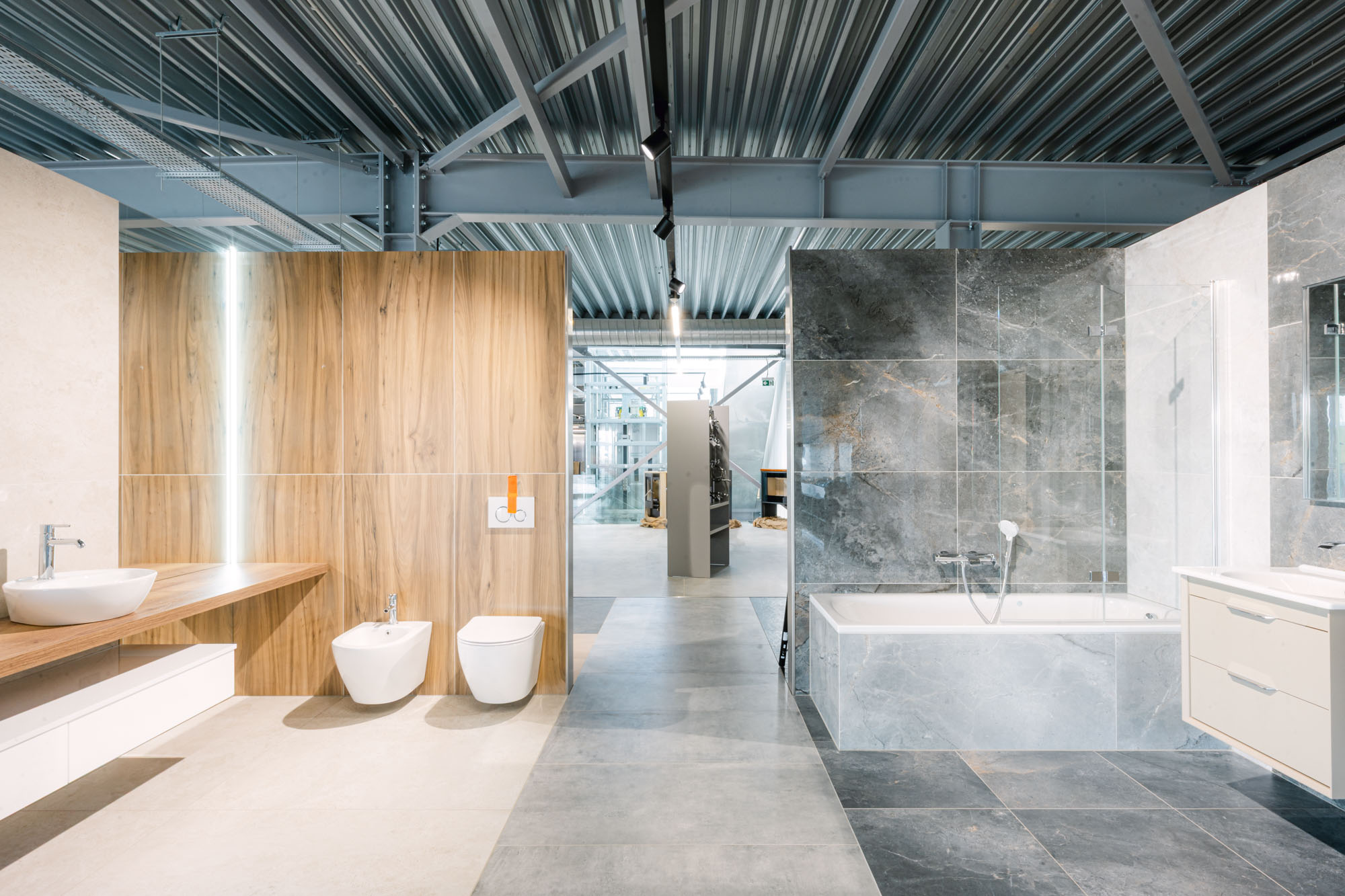
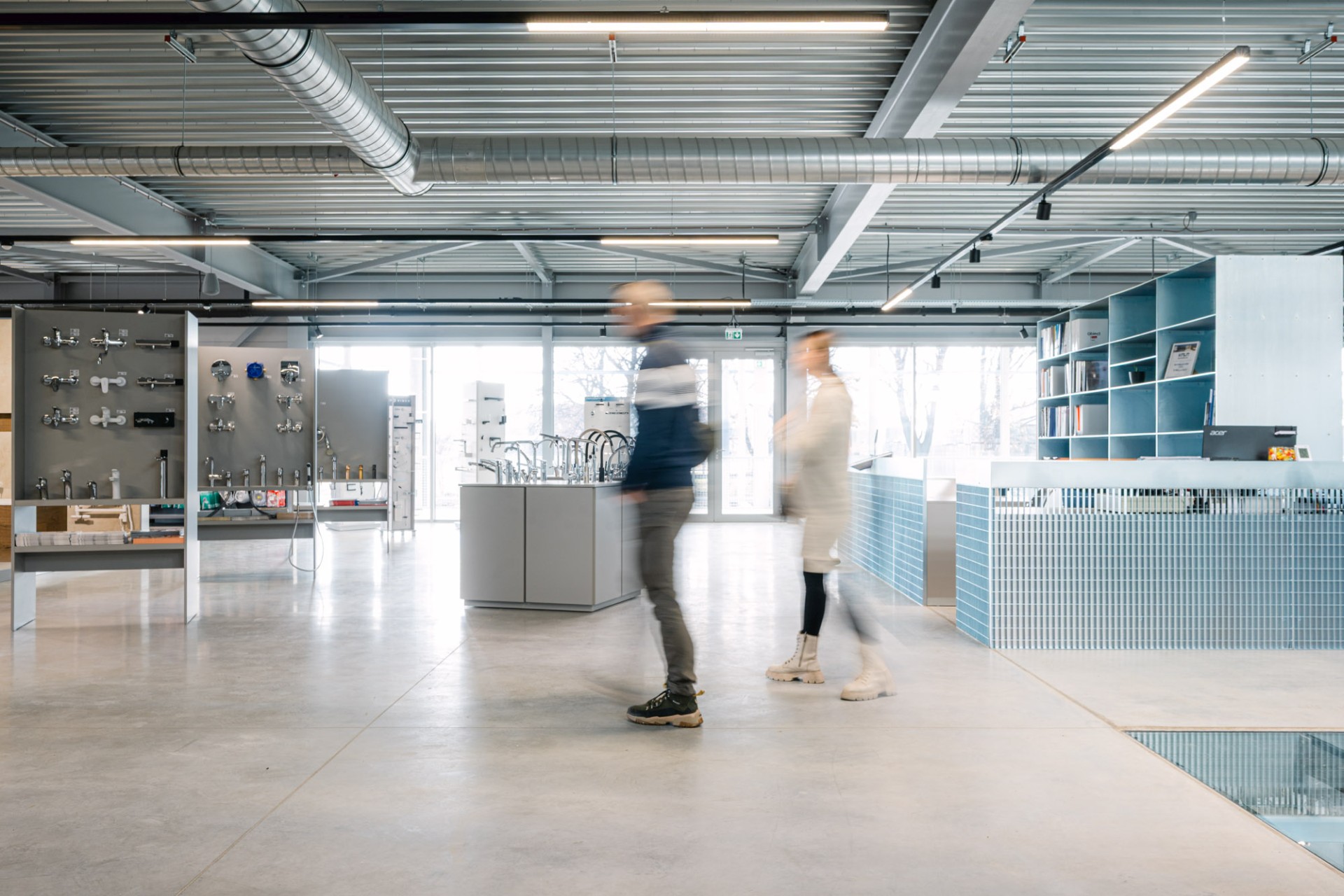
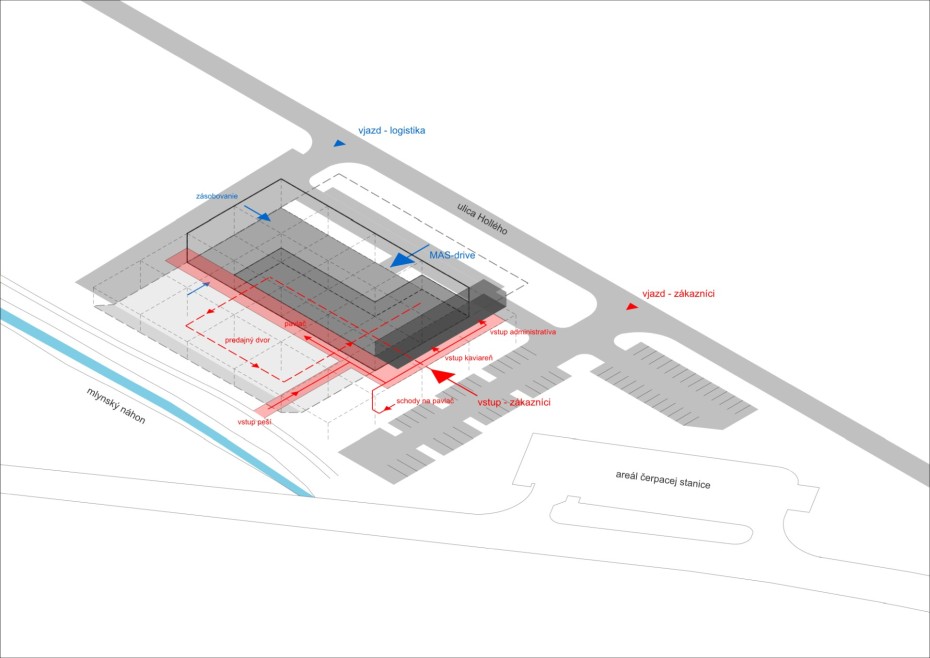
This intermediate space is central to the architectural concept. It draws from the operational logic of the company’s former premises, where a significant portion of goods was displayed and stored outdoors. The new design formalizes this condition: covered external areas extend the retail environment, while a dedicated side drive-in allows regular customers to collect goods directly from the warehouse, even outside opening hours. The main entrance is recessed beneath the administrative volume and marked by a contemporary steel portico. Staff and visitors access the offices via an external stair and terrace. The ground floor accommodates hardware and installation retail with an adjoining outdoor terraces, while the upper level houses the bathroom studio and administrative offices. The cantilevered office of the company’s director overlooks the logistical operations of the site. Internally, translucent polycarbonate partitions delineate retail and storage areas, maintaining visual continuity.
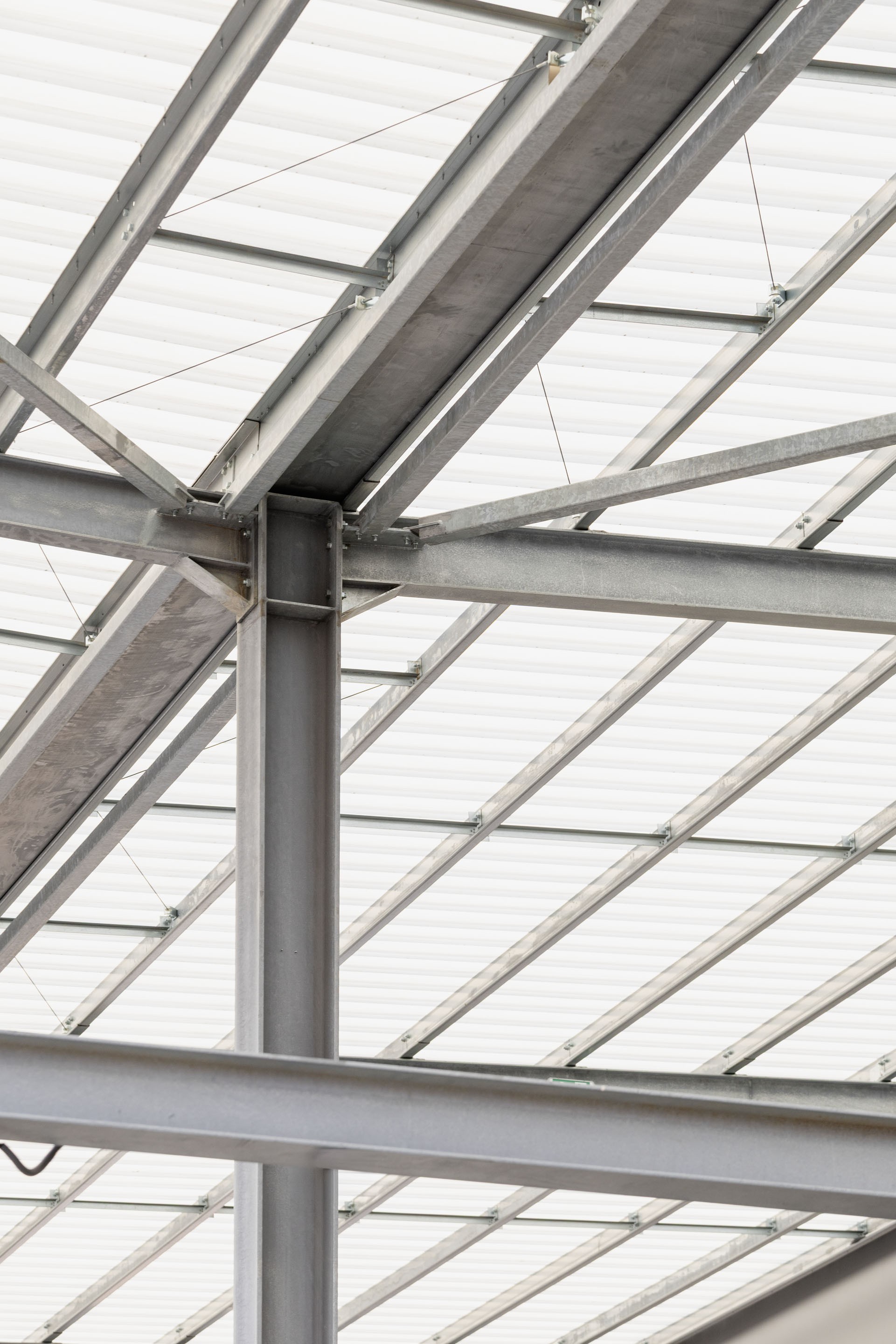
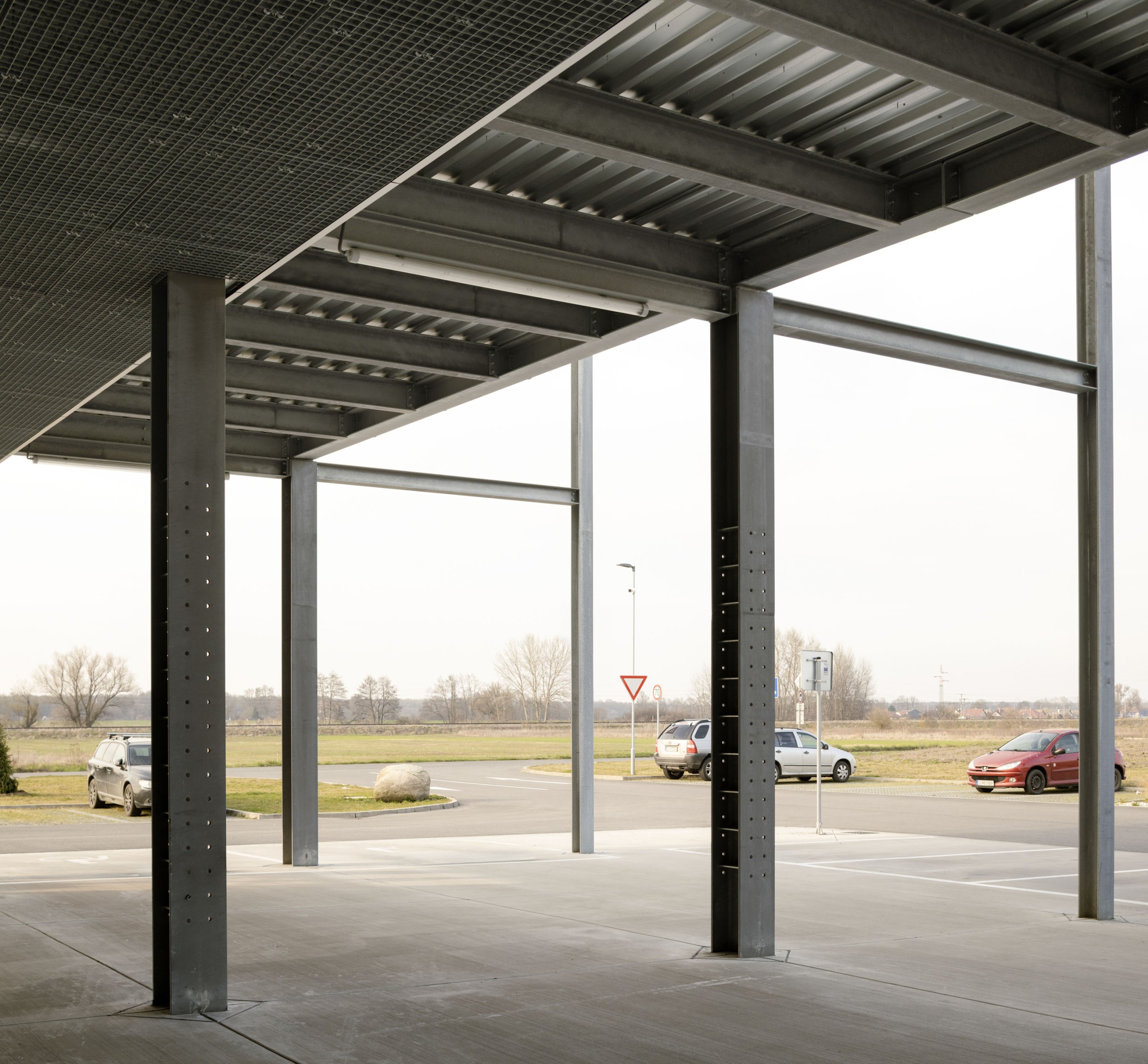
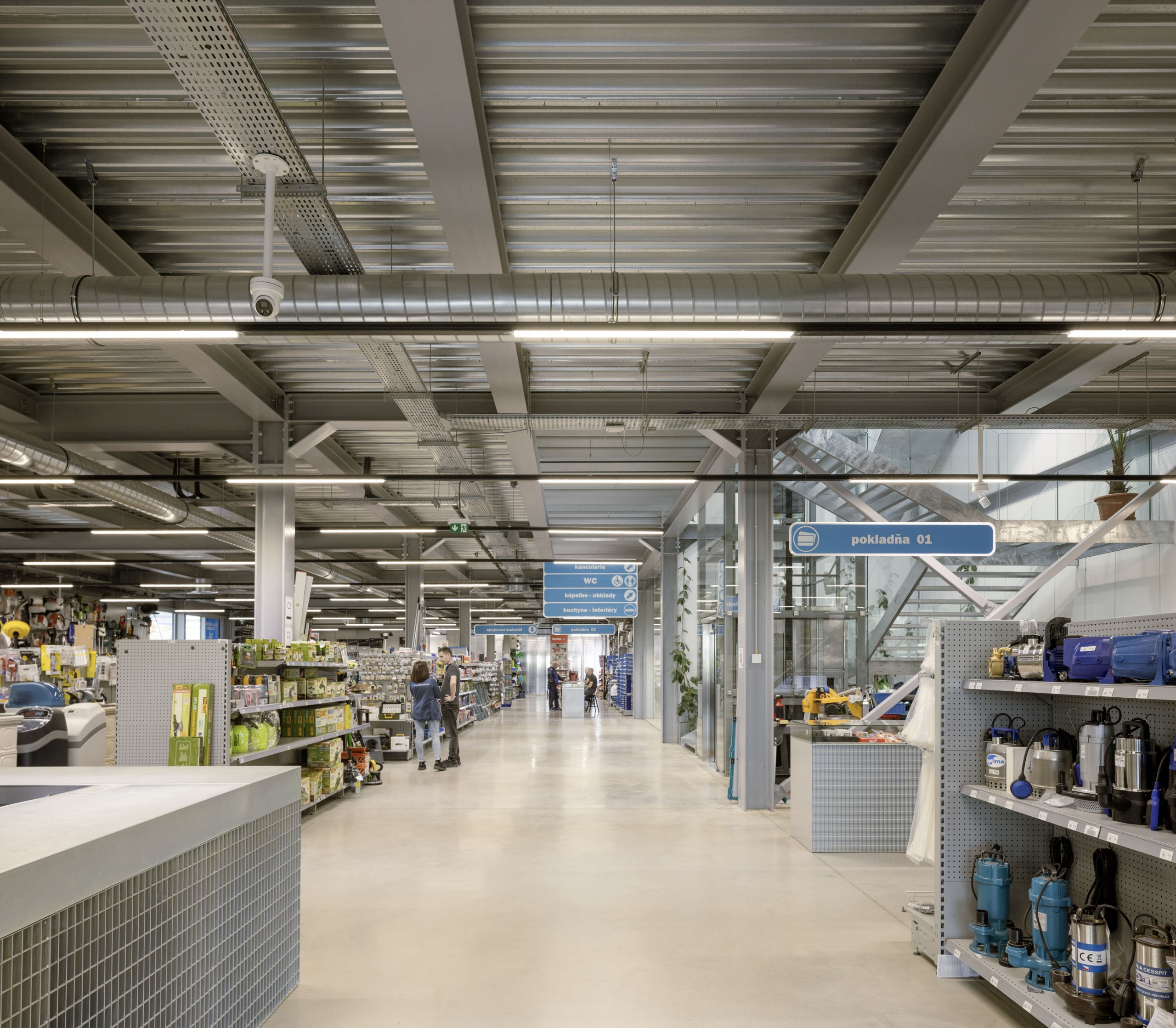
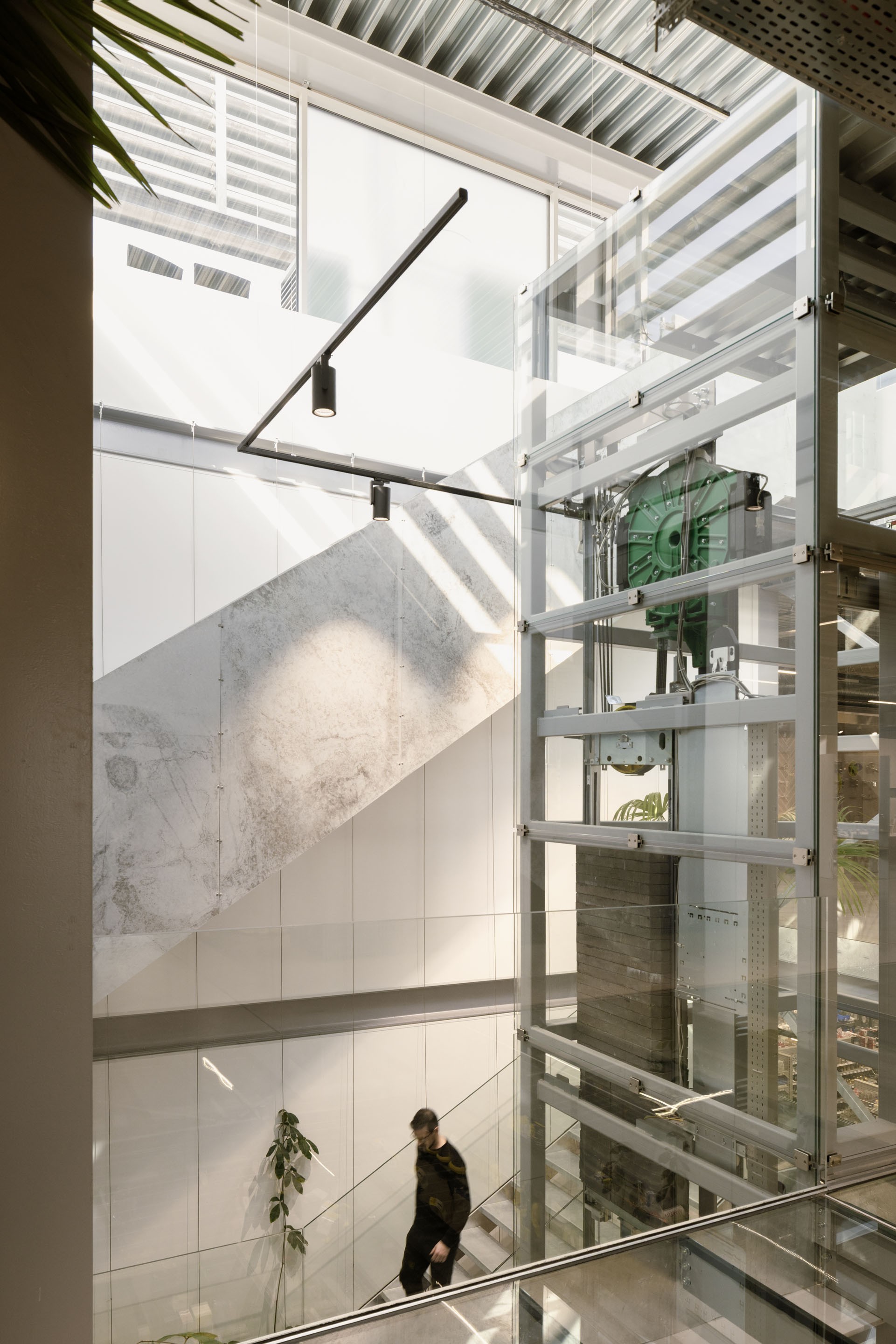
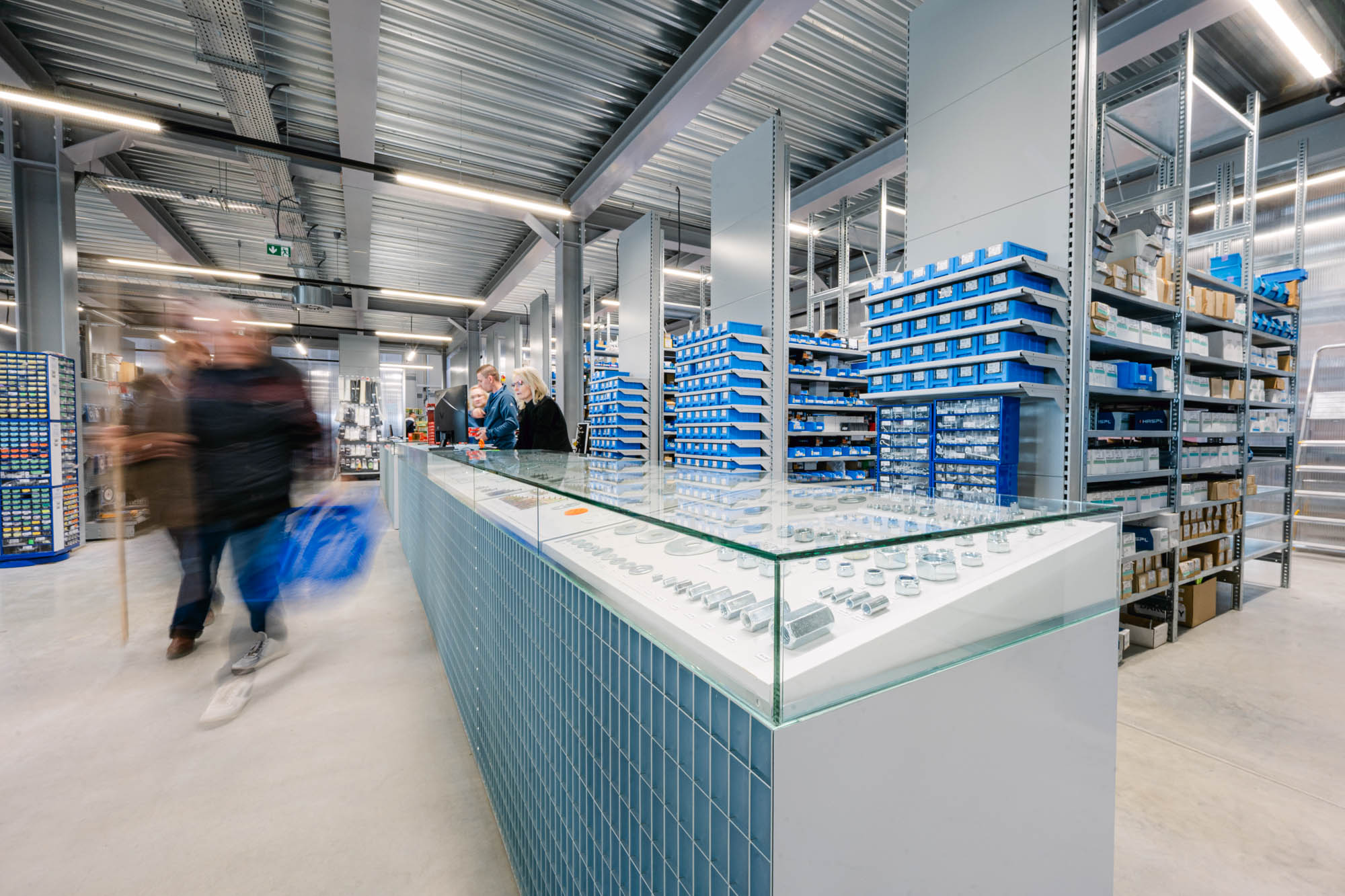
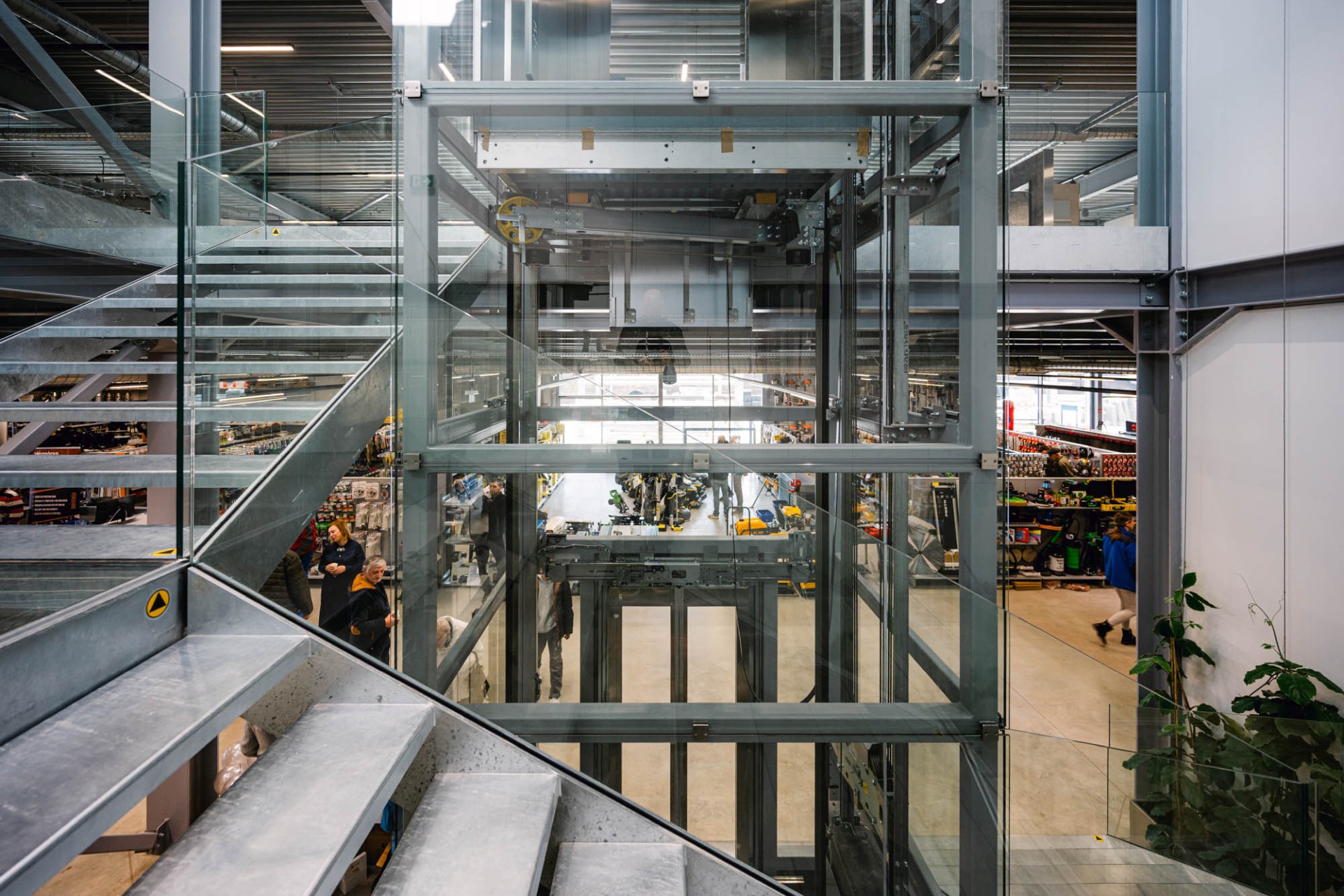
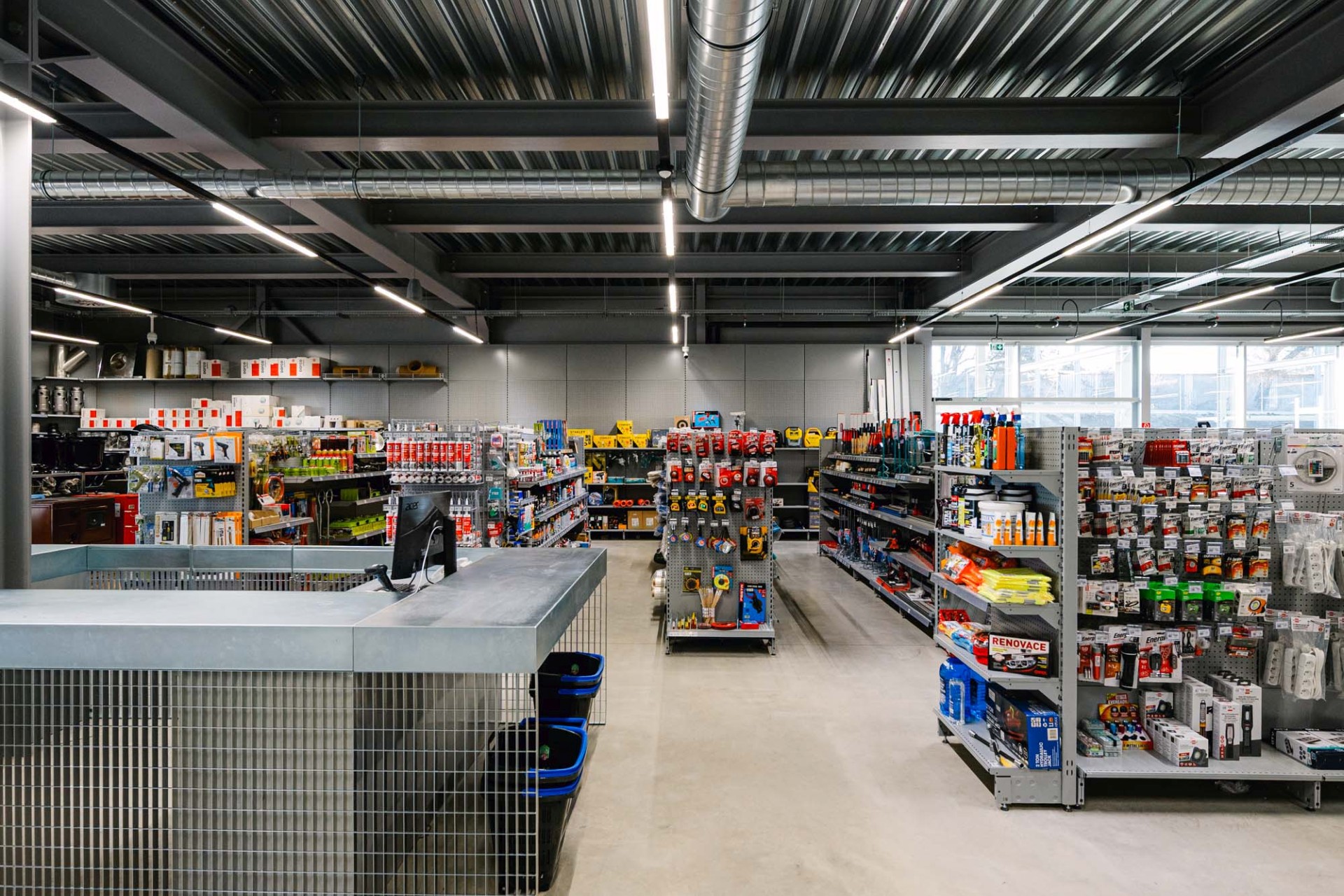
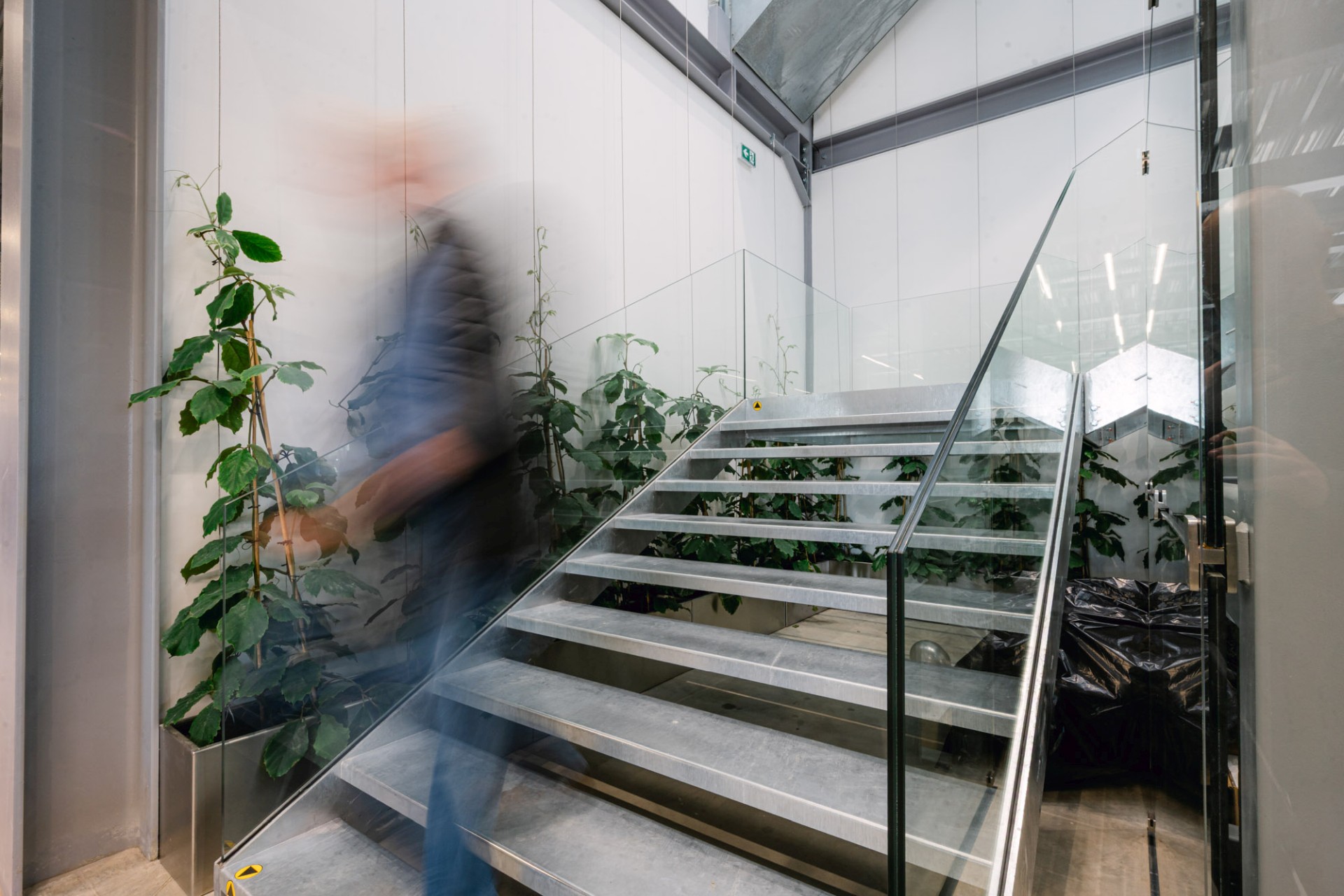
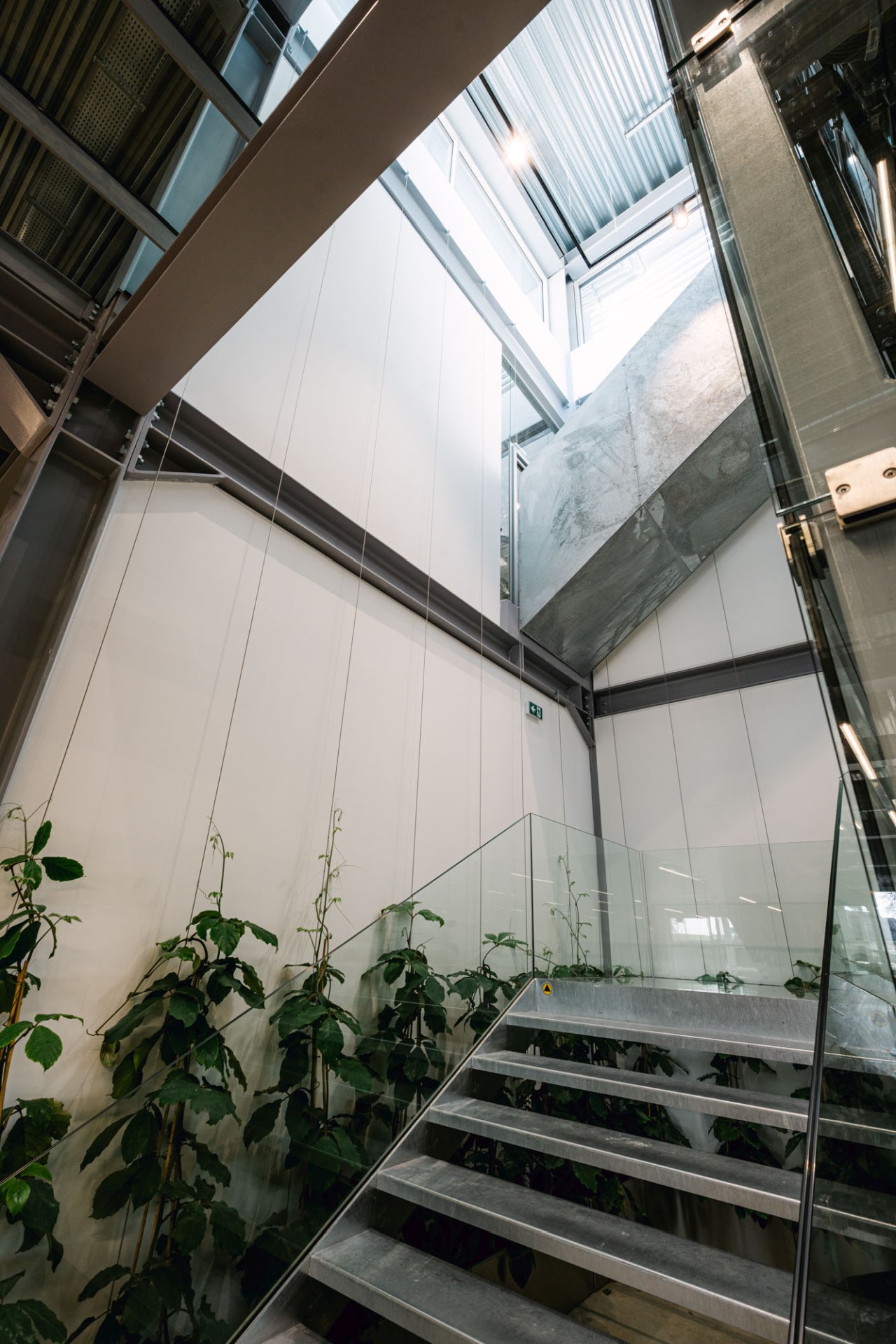
The structure is composed of exposed prefabricated steel profiles, with the primary 15 × 15 m grid further subdivided into a 7.5 × 7.5 m module. This order extends to the polished concrete floor at ground level. A consistent principle guides the material strategy: to reveal rather than conceal. Structural elements are left exposed, their inherent qualities shaping the architectural expression. Exterior steel components are galvanized; interior elements are finished with a grey fire-protective coating. Galvanized trapezoidal sheets form the ceiling and roof surfaces, while installations remain visible throughout. Exterior intermediate spaces are covered with translucent fiberglass panels, softening daylight and reinforcing the layered spatial condition.
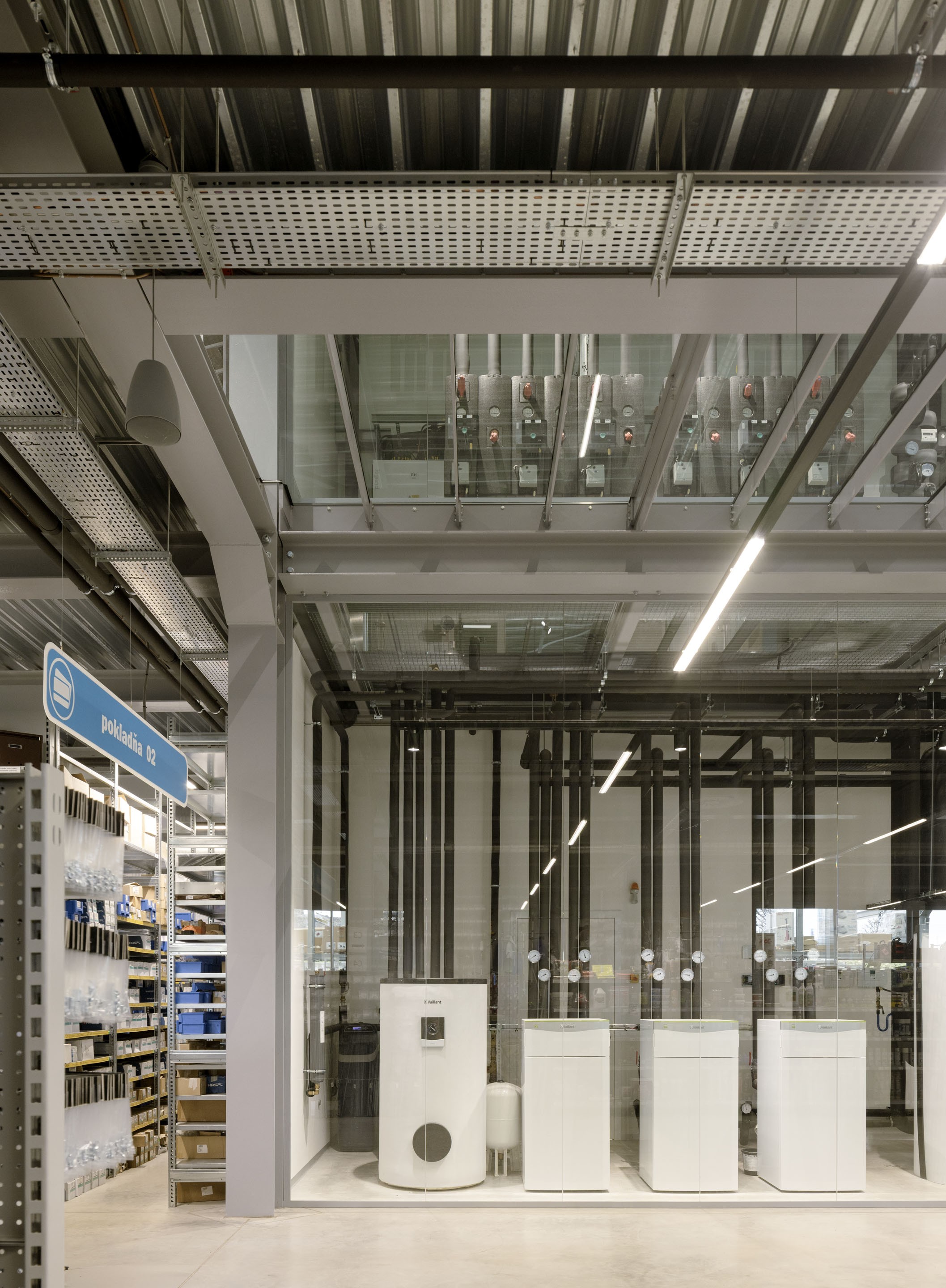
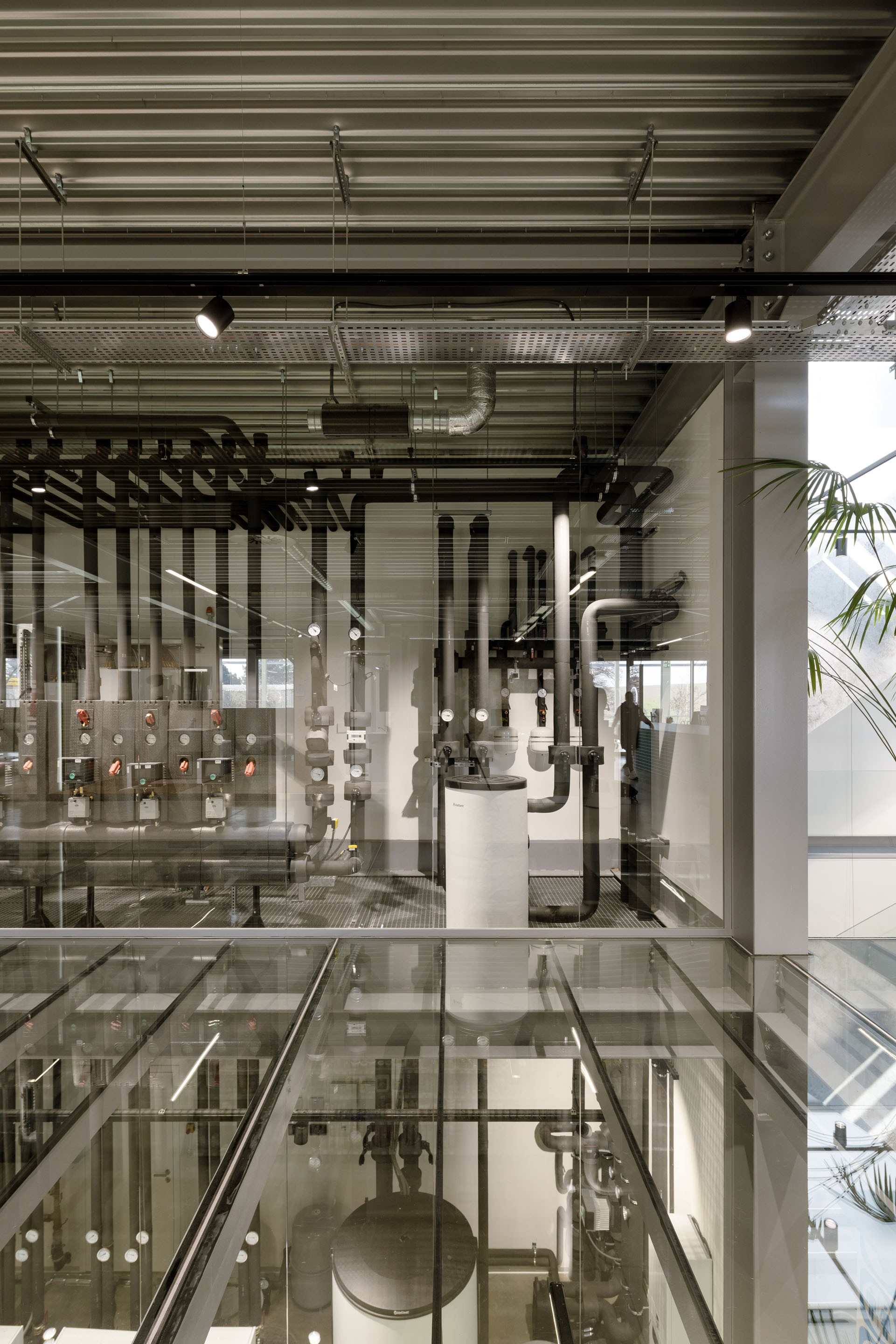
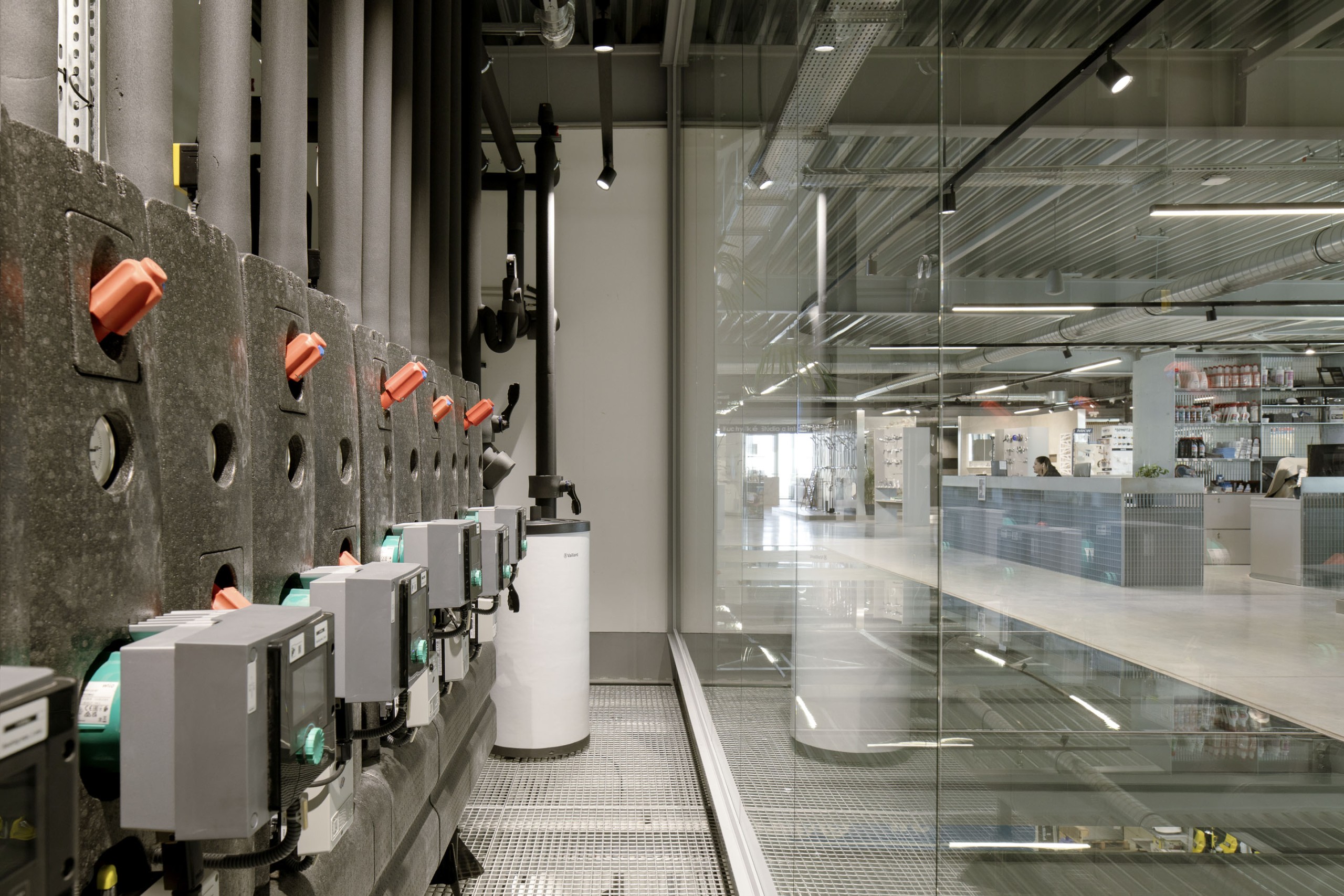
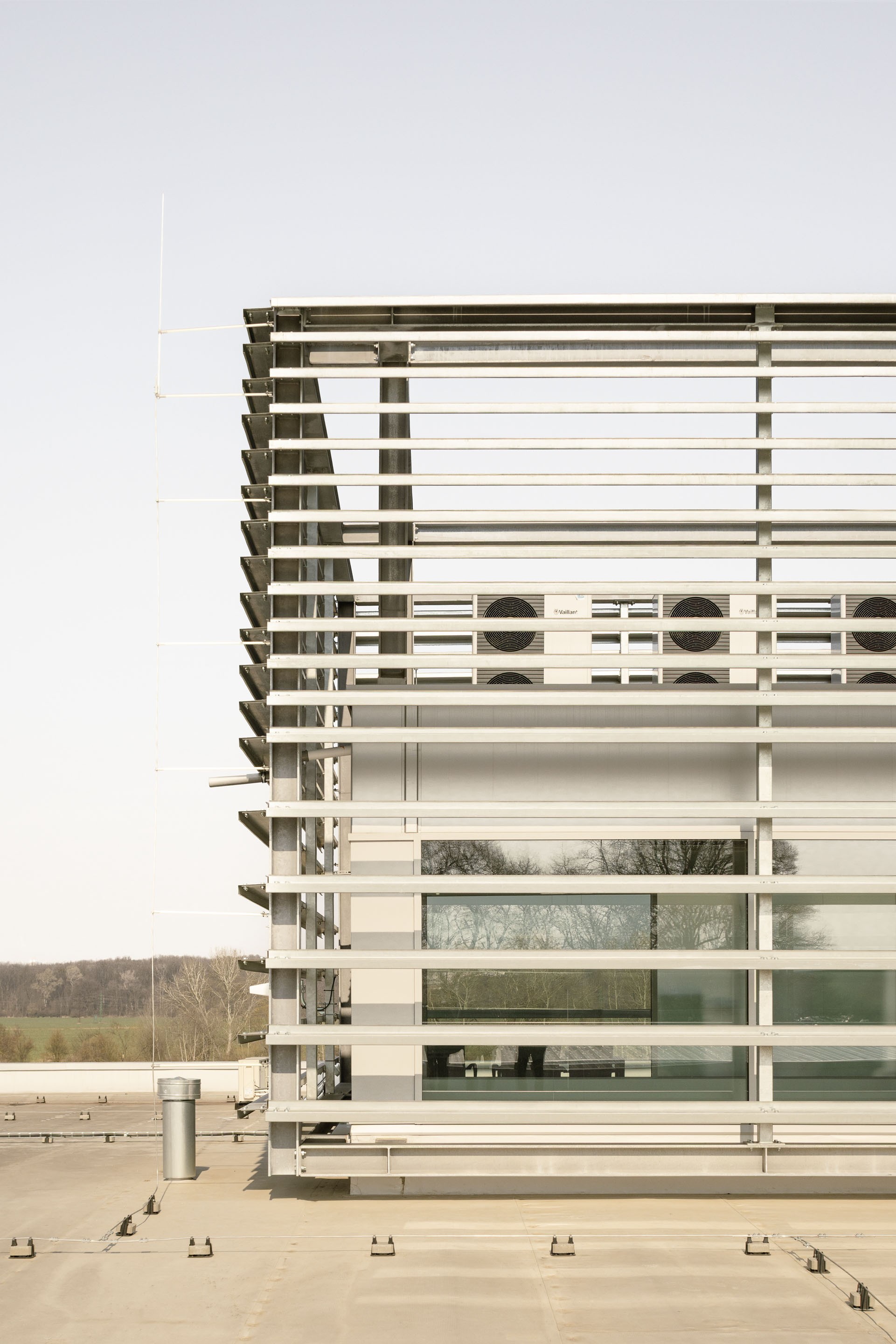
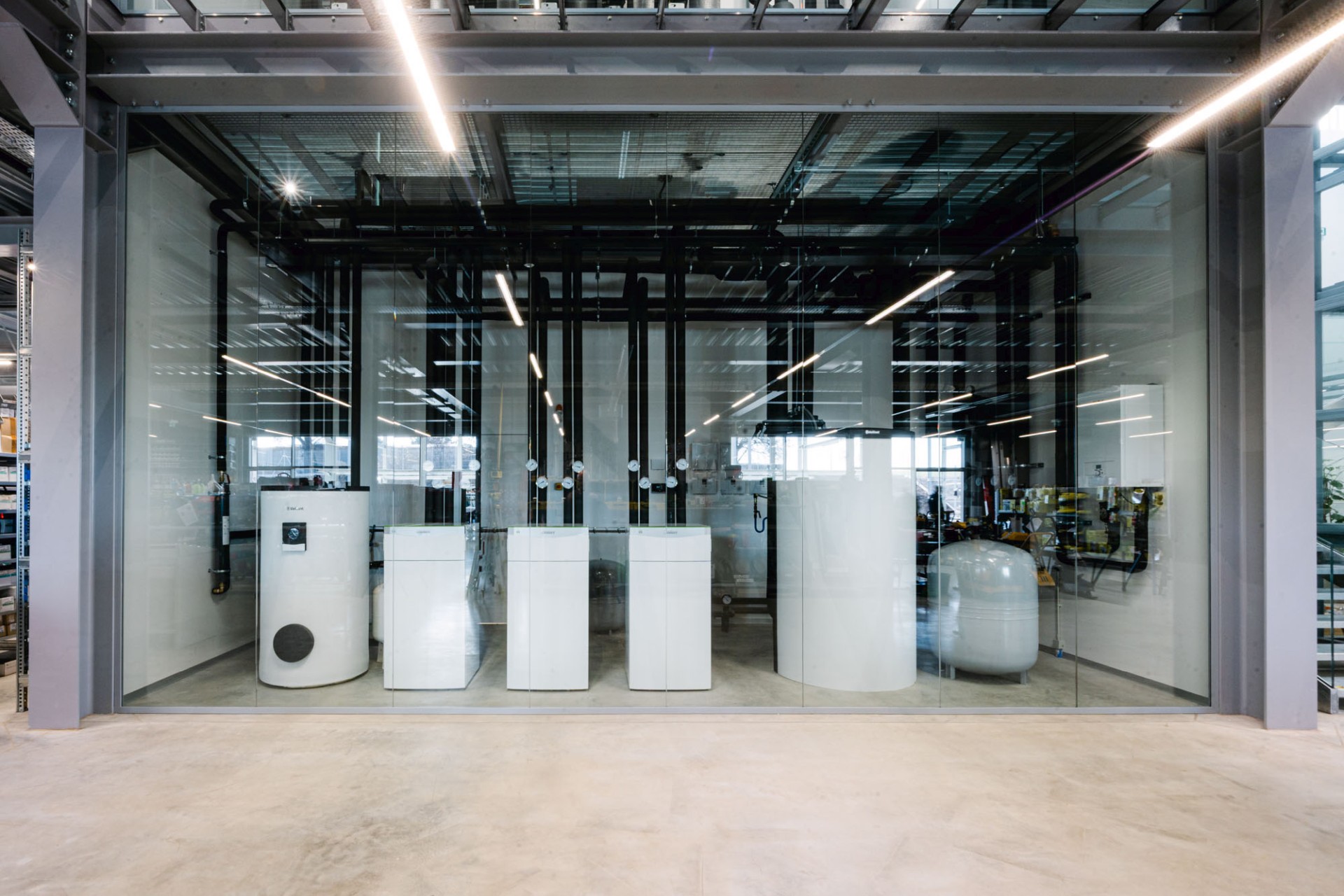
Technological systems are integral to both the building’s performance and its architectural narrative. Given the client’s expertise in building services—also reflected in their product range—the technical infrastructure is deliberately exposed and made legible to customers. A centrally positioned plant room anchors the system, distributing heating and cooling across both floors. The building achieves a high degree of energy self-sufficiency through a combination of ground-source and air-source heat pumps, supported by photovoltaic panels on the roof.
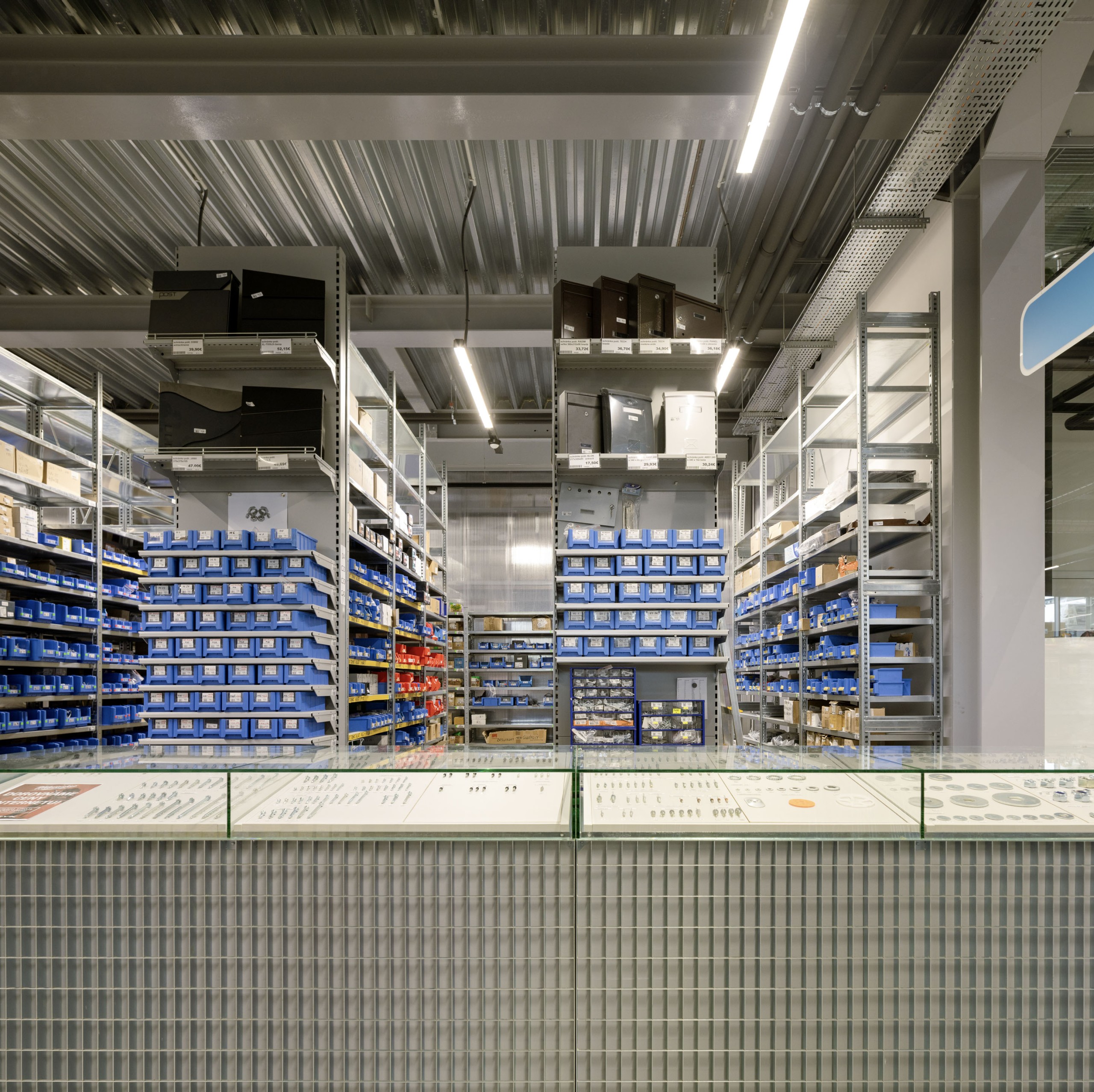
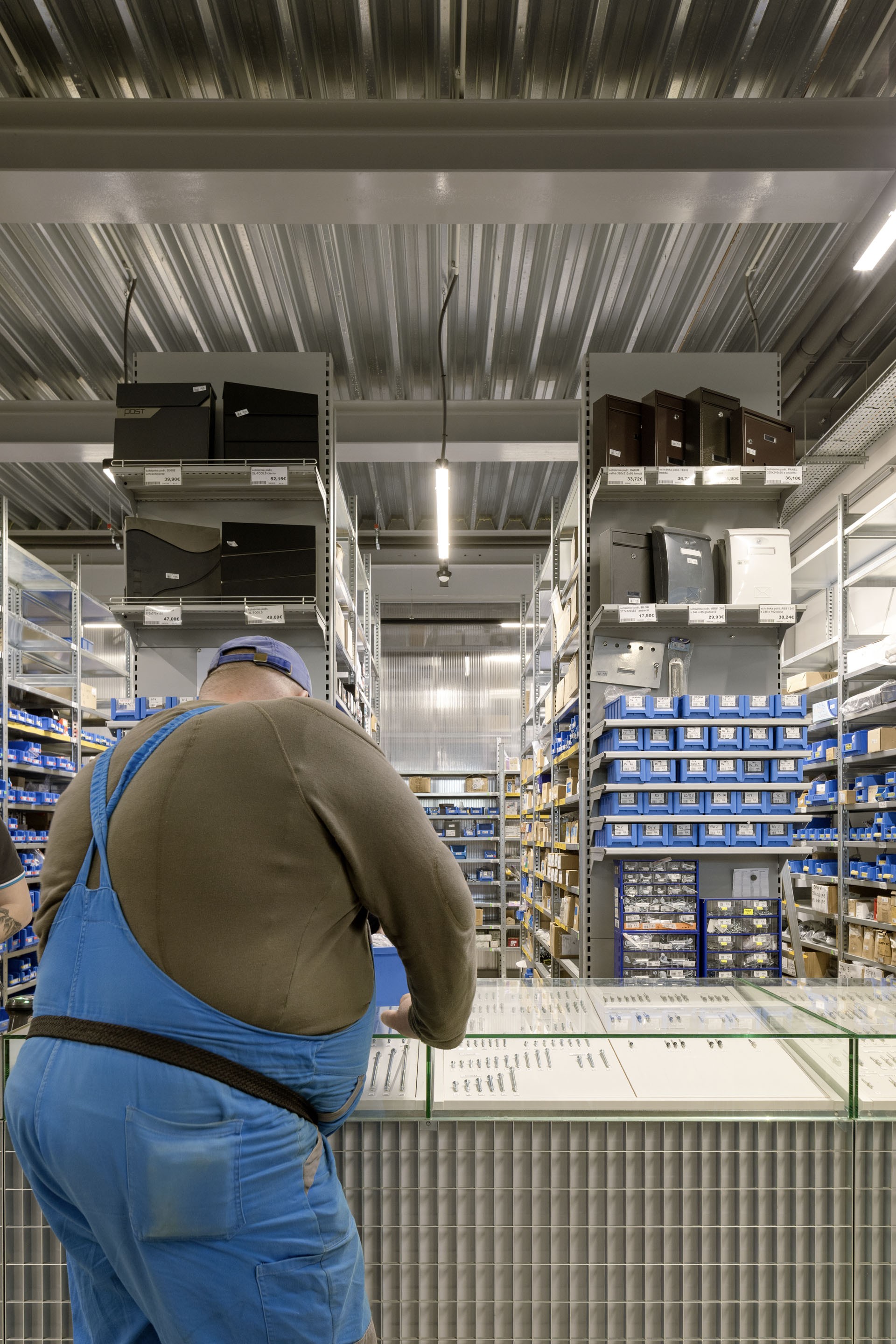
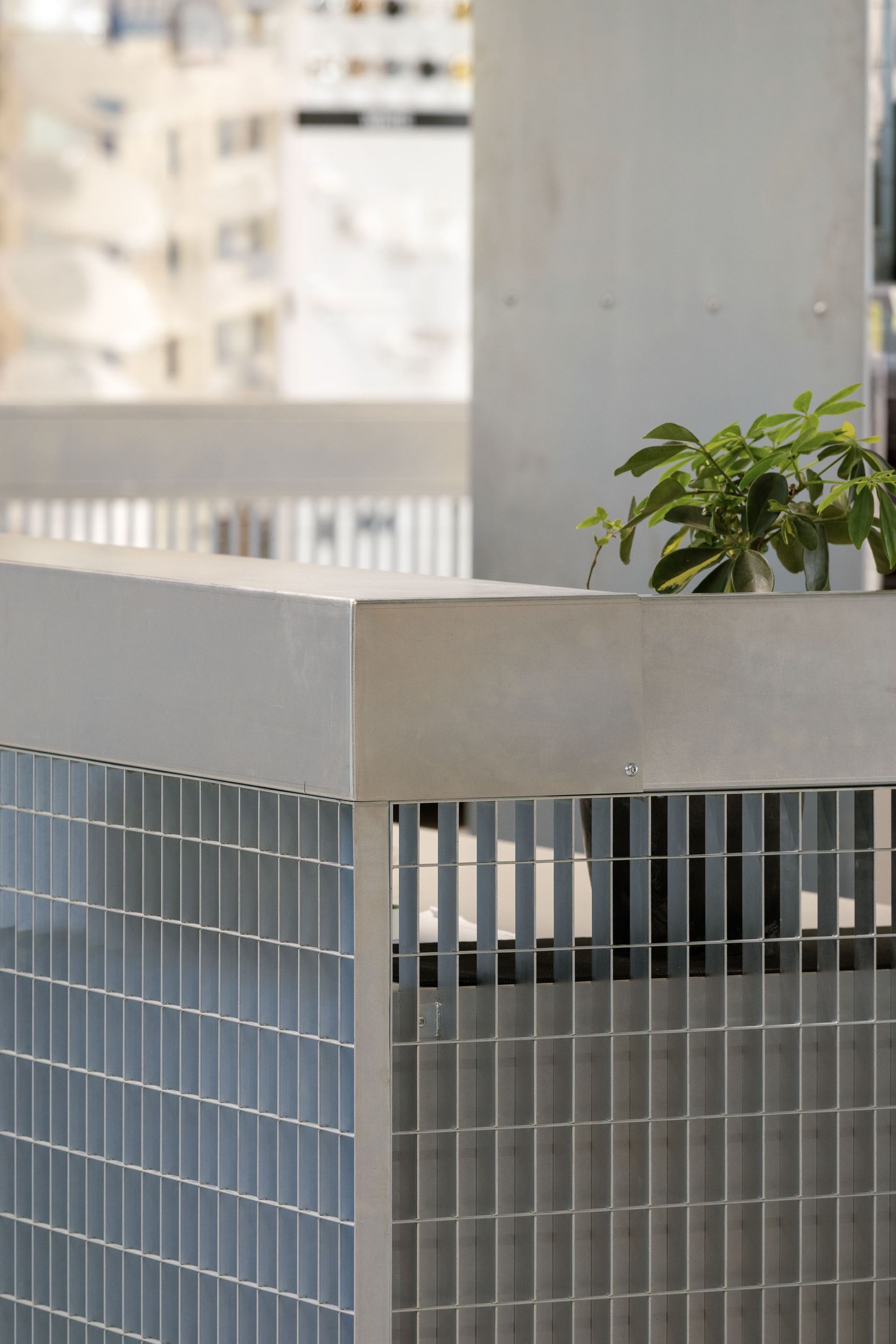
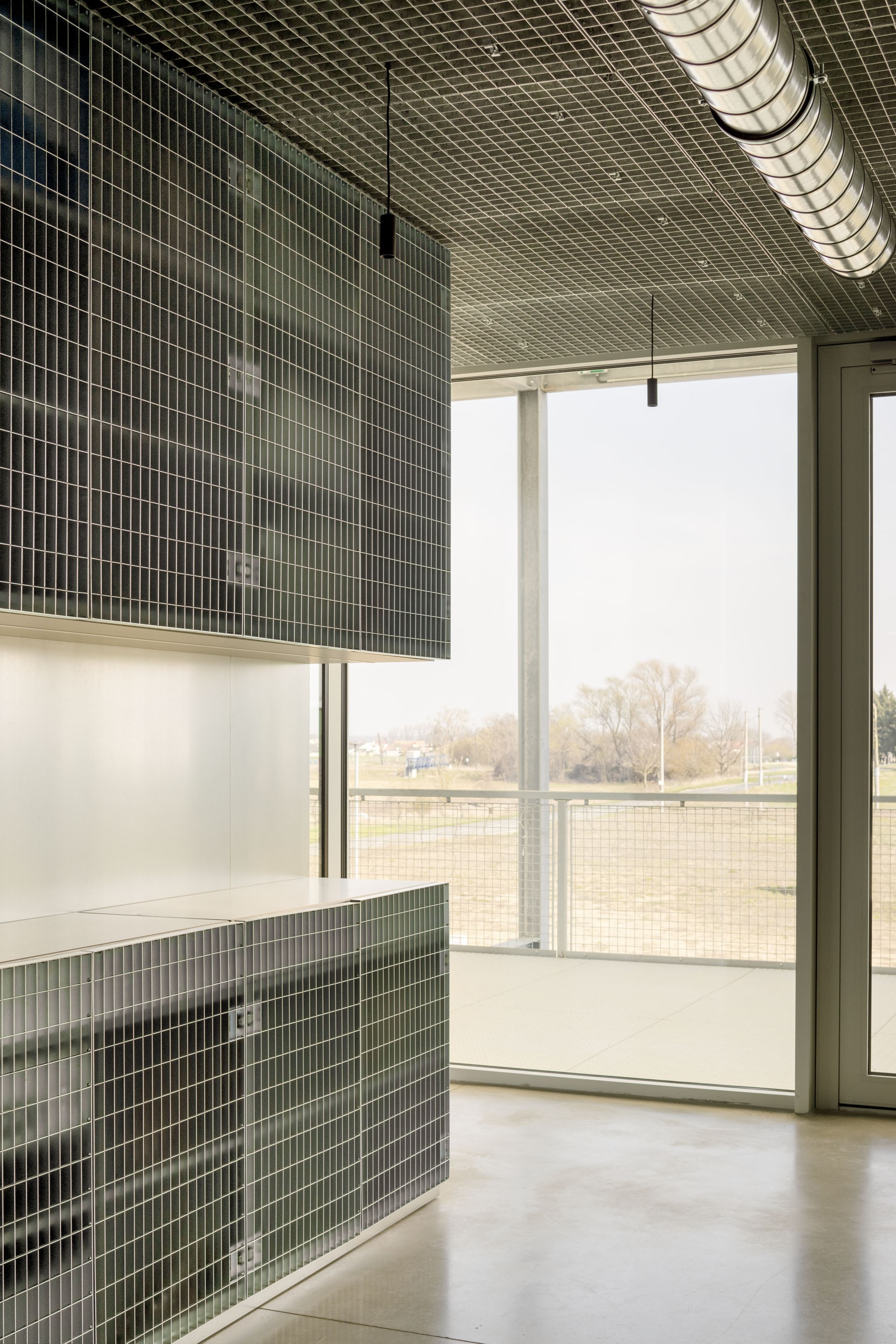
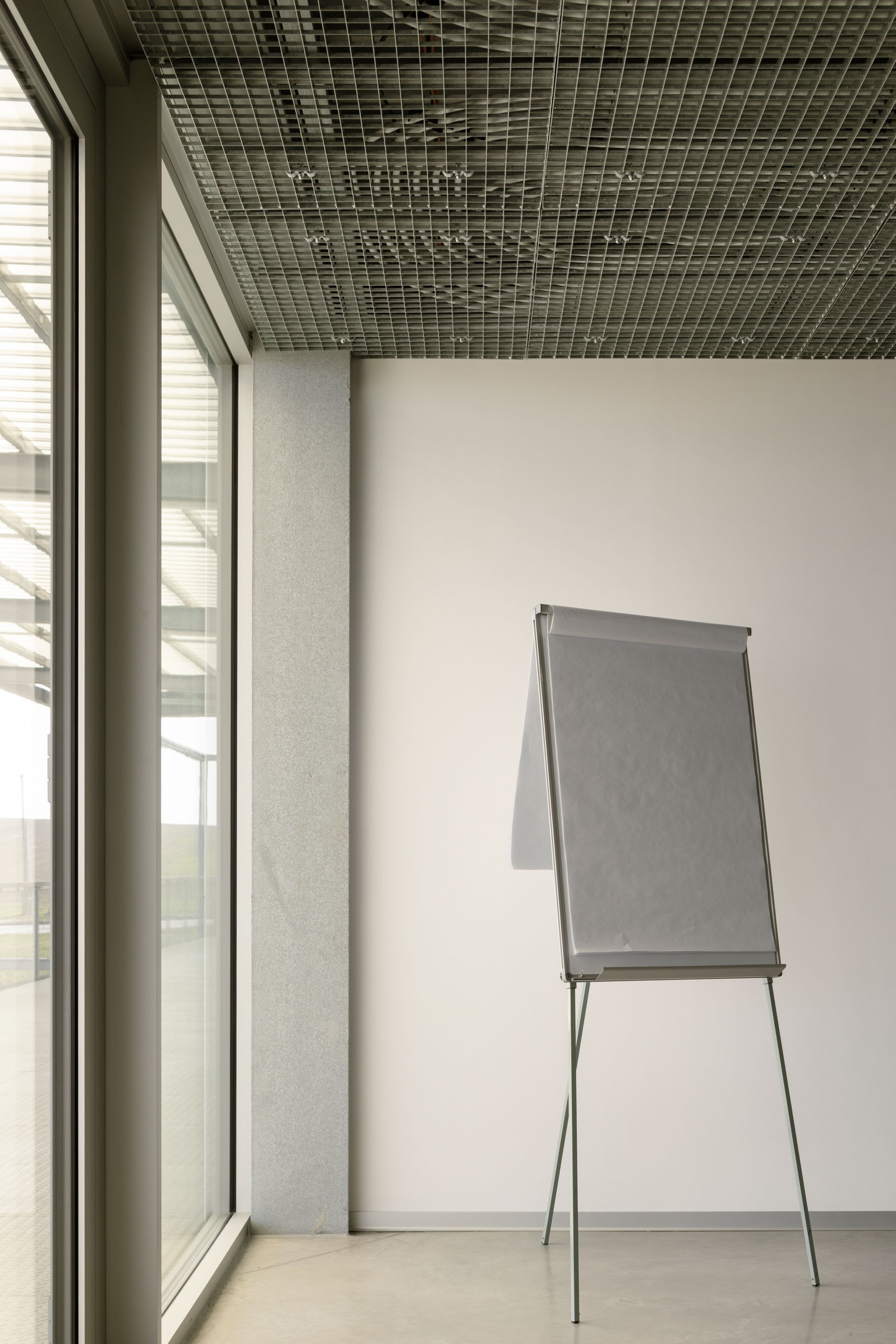
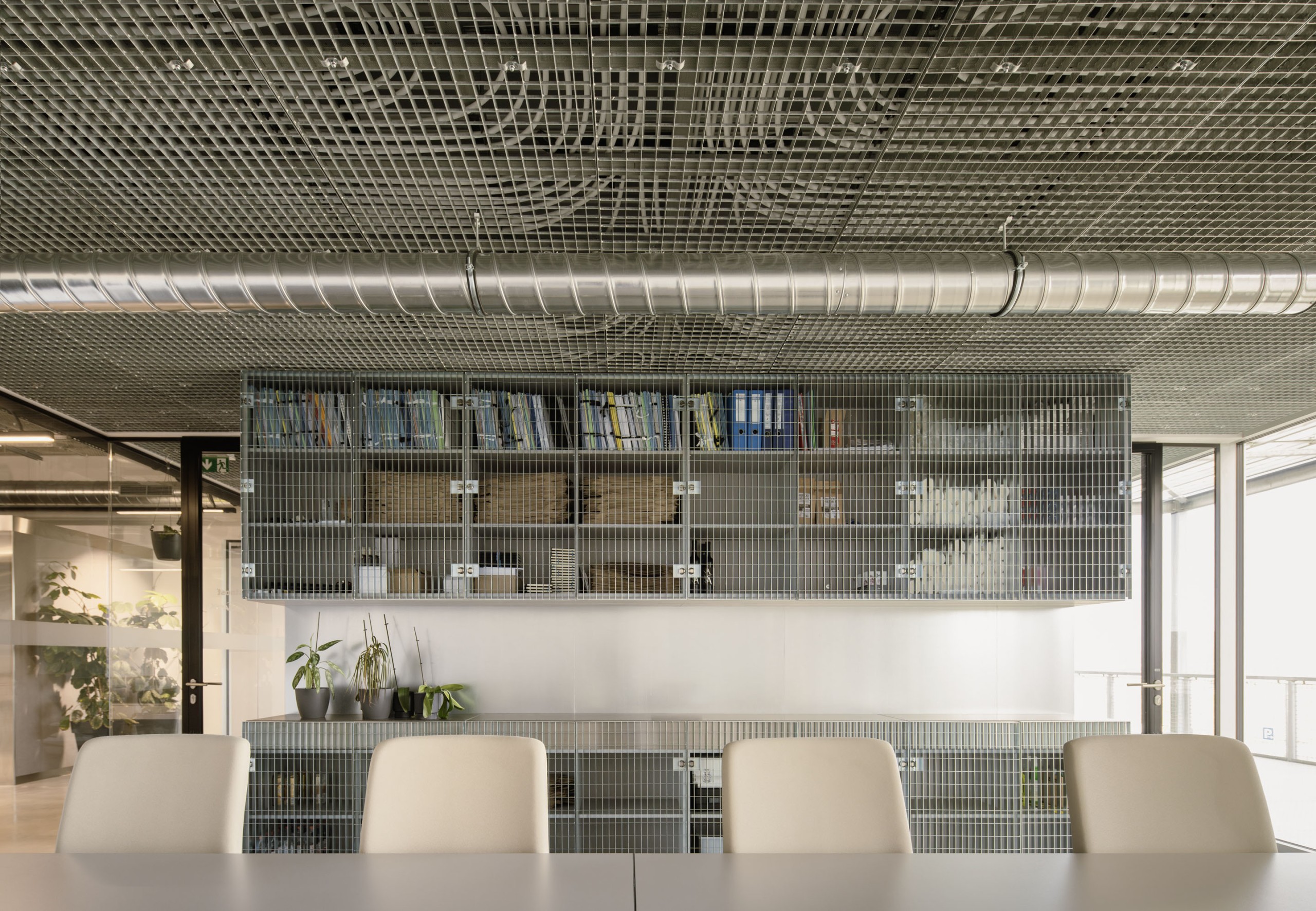
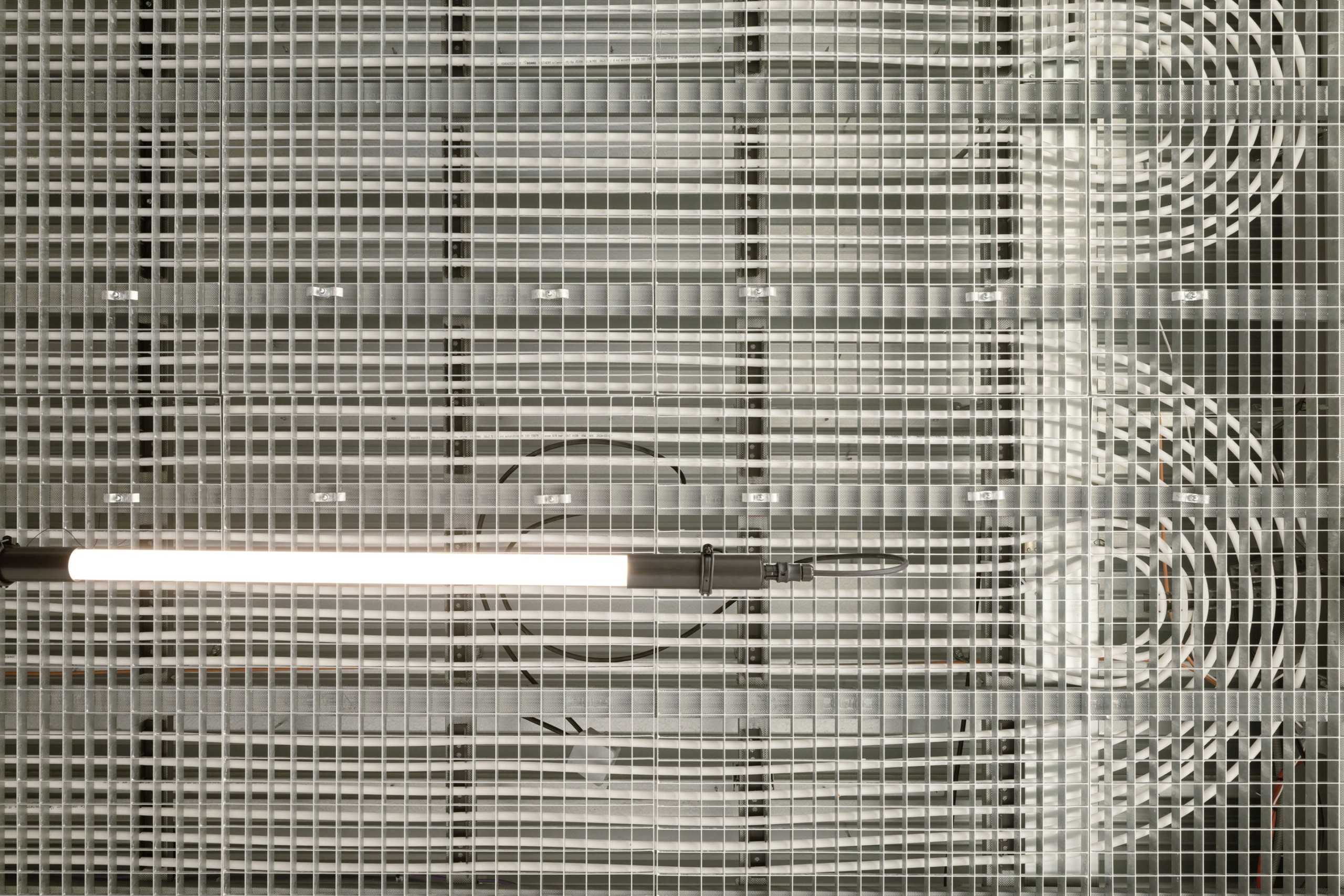
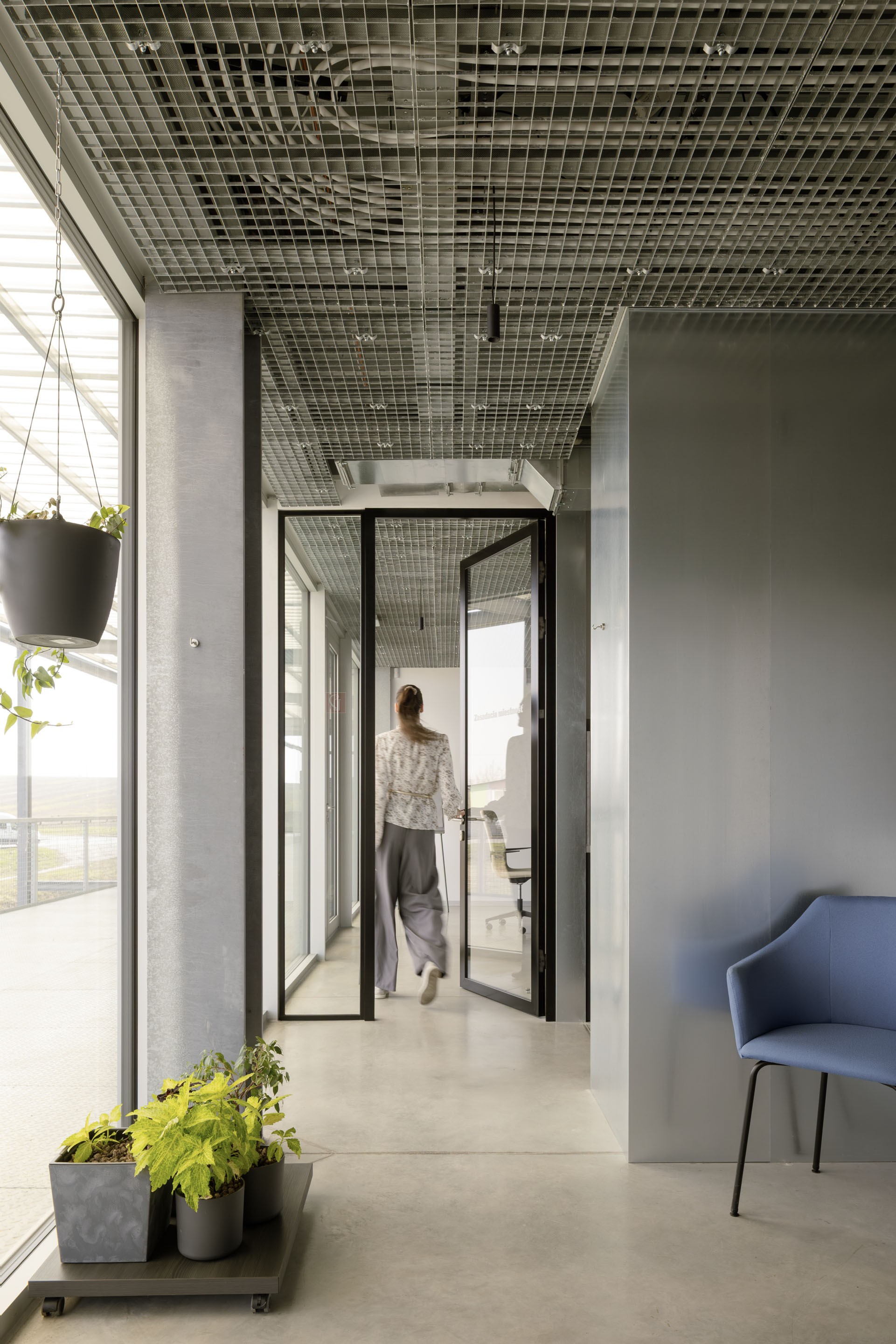
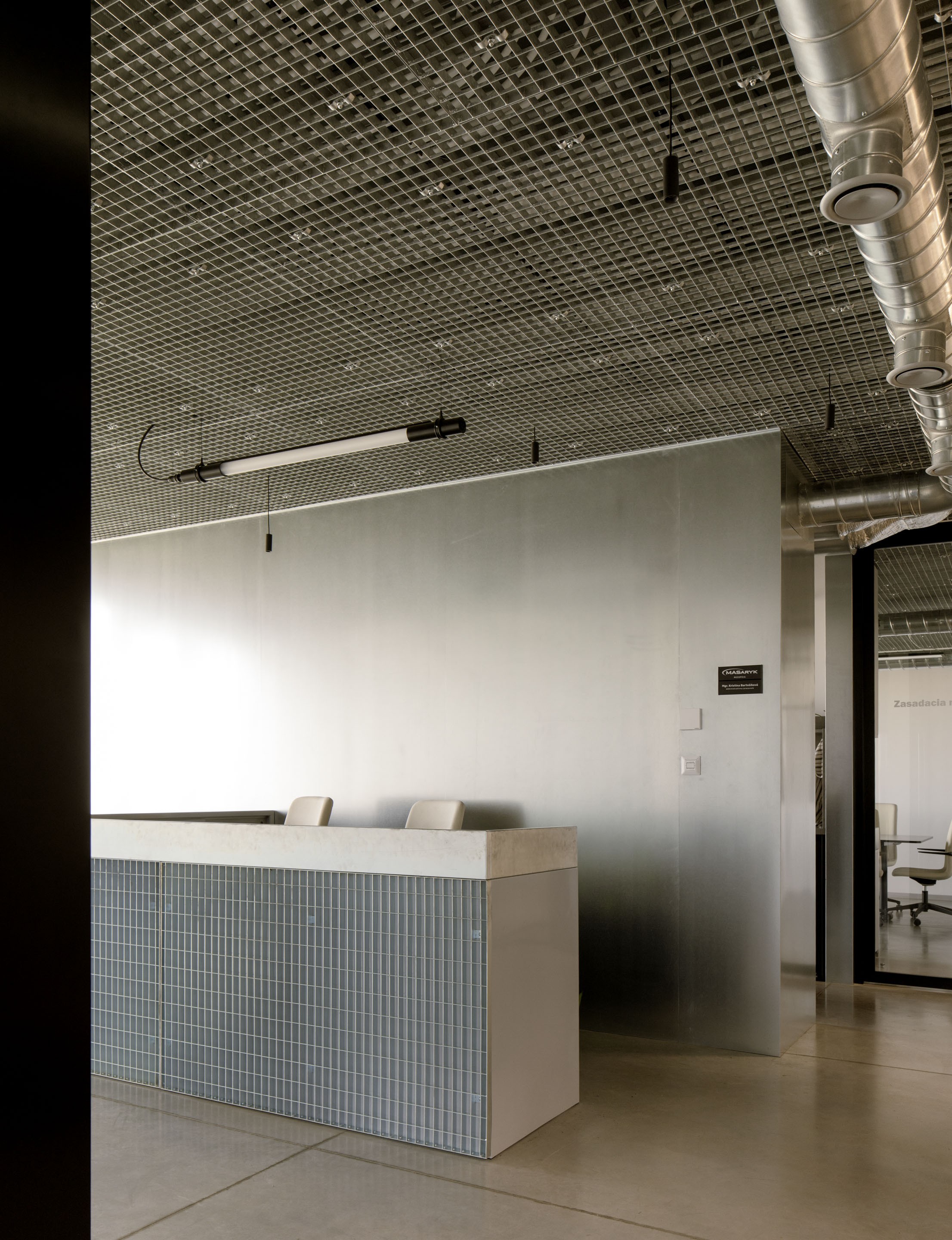
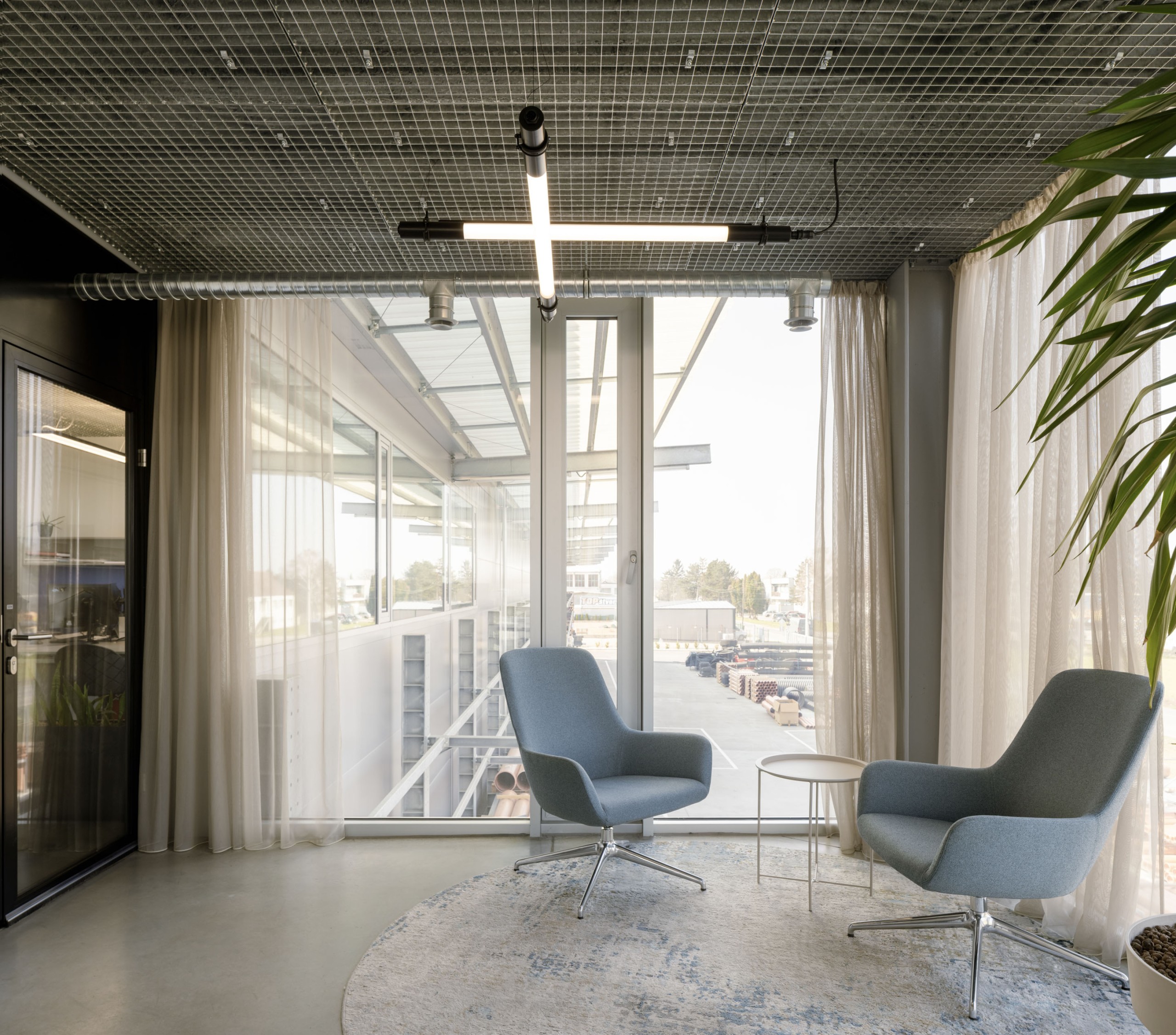
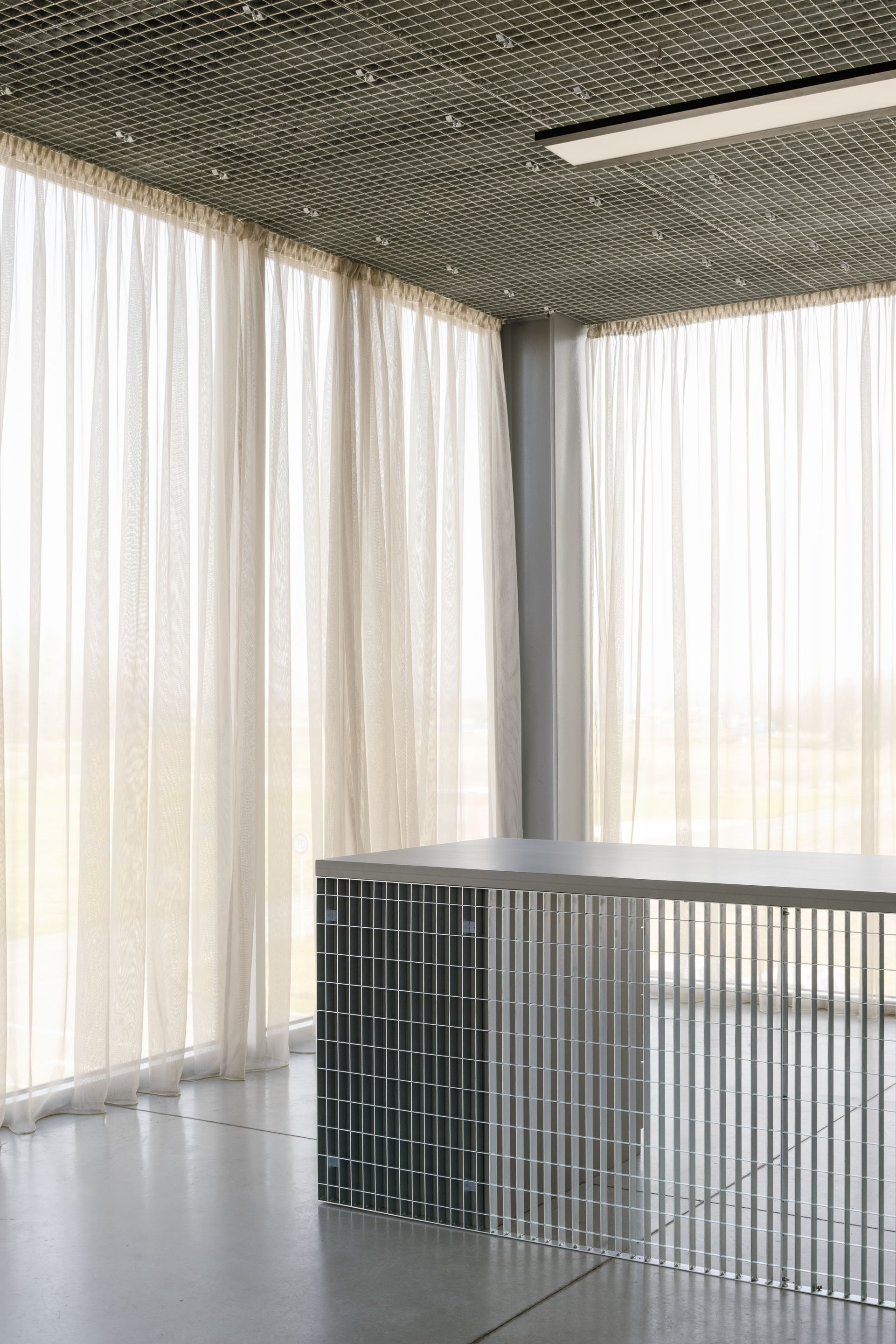
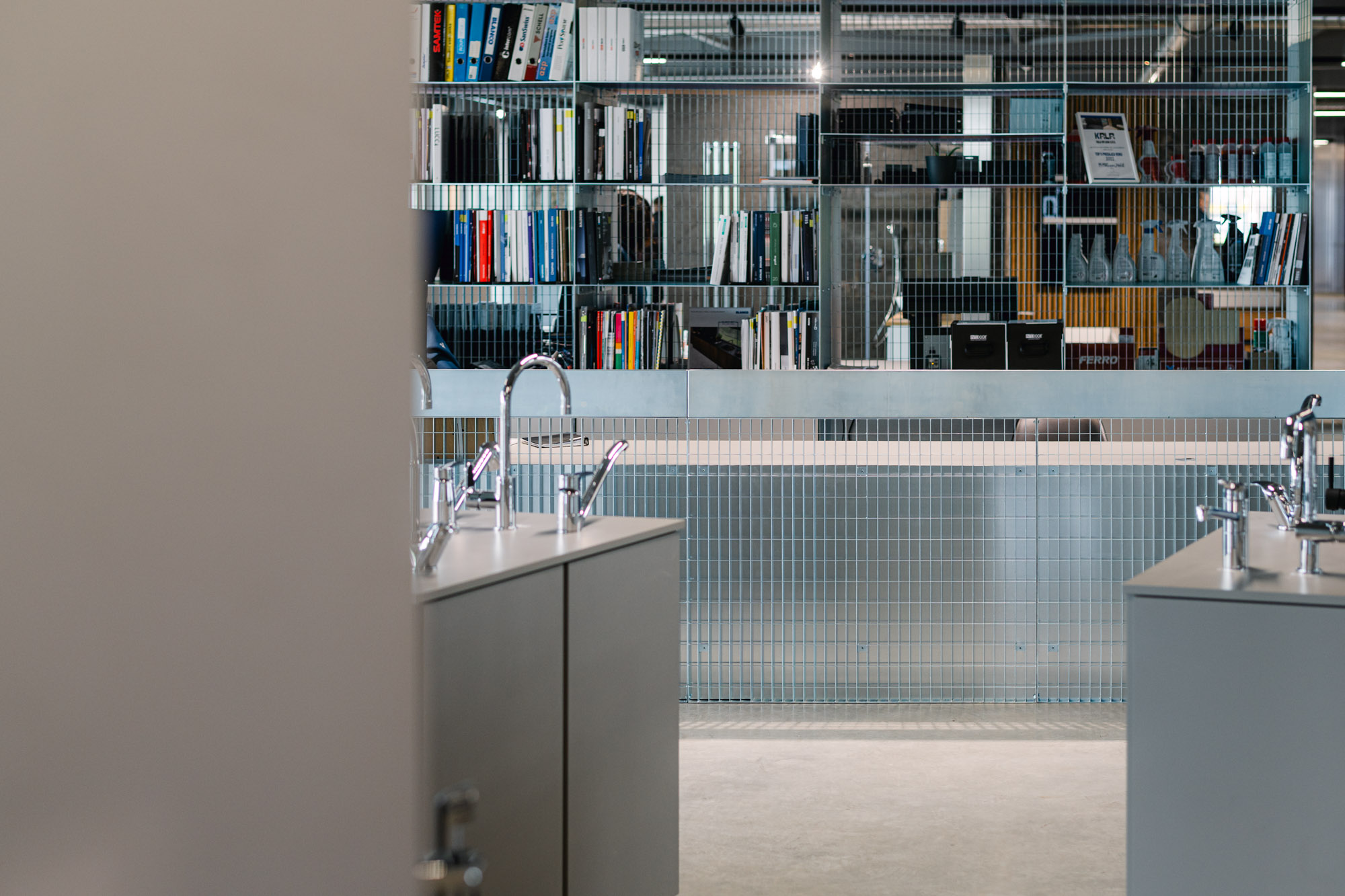
Seven 100-meter-deep boreholes beneath the building supply geothermal energy, supplemented by rooftop units during peak demand. Heating and cooling are embedded within the building fabric: a 200 mm concrete slab at ground level acts as a thermal mass, utilizing the so-called “thermal lens” effect of the subsoil, while the upper floor employs a composite steel–concrete ceiling with integrated distribution. In the administrative areas, an experimental ceiling cooling system has been implemented: a steel grating suspended beneath the cooling network enhances thermal exchange while simultaneously defining the spatial character. This grating is also deployed externally, where it articulates the entrance zone and extends the material language of the interior. The project encompasses the interior design as well, where the steel grating motif continues in counters and custom furnishings, reinforcing the coherence between architecture, construction, and use.
Shemes

Plans
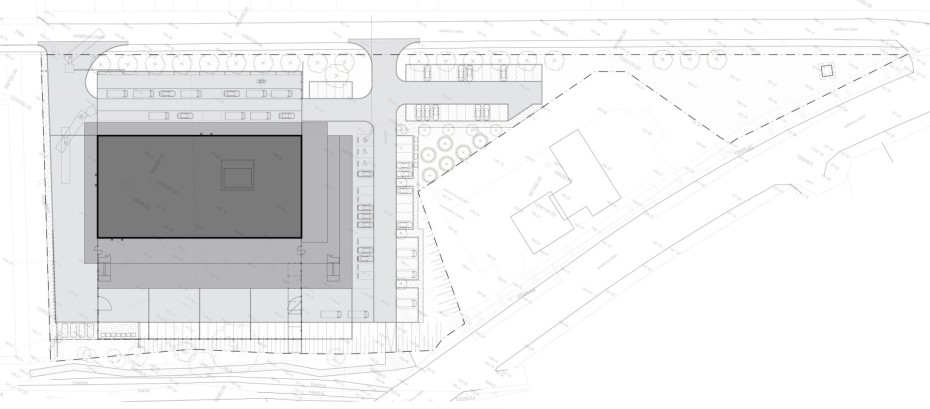
site
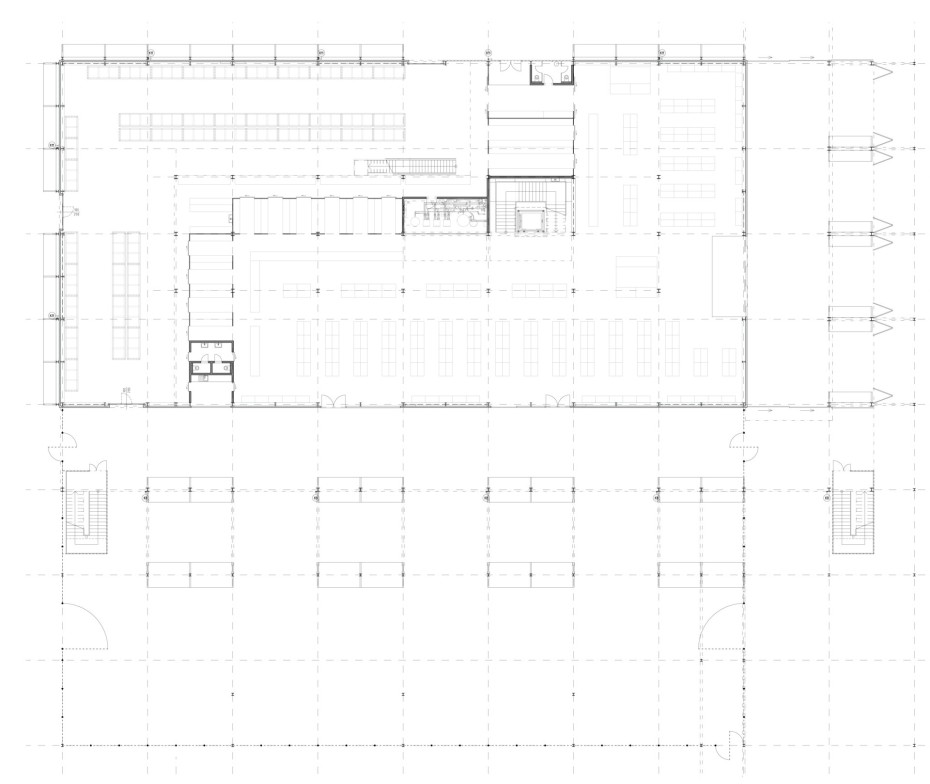
ground floor plan

first floor plan
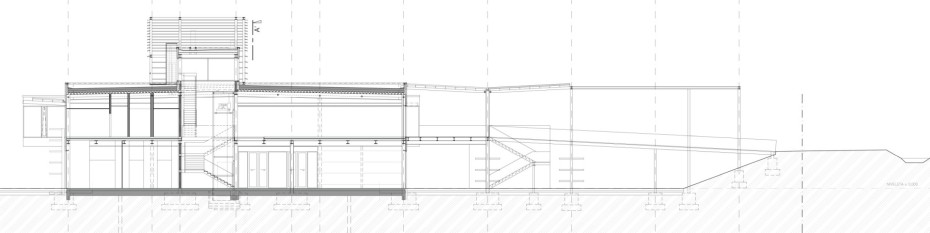
cut section